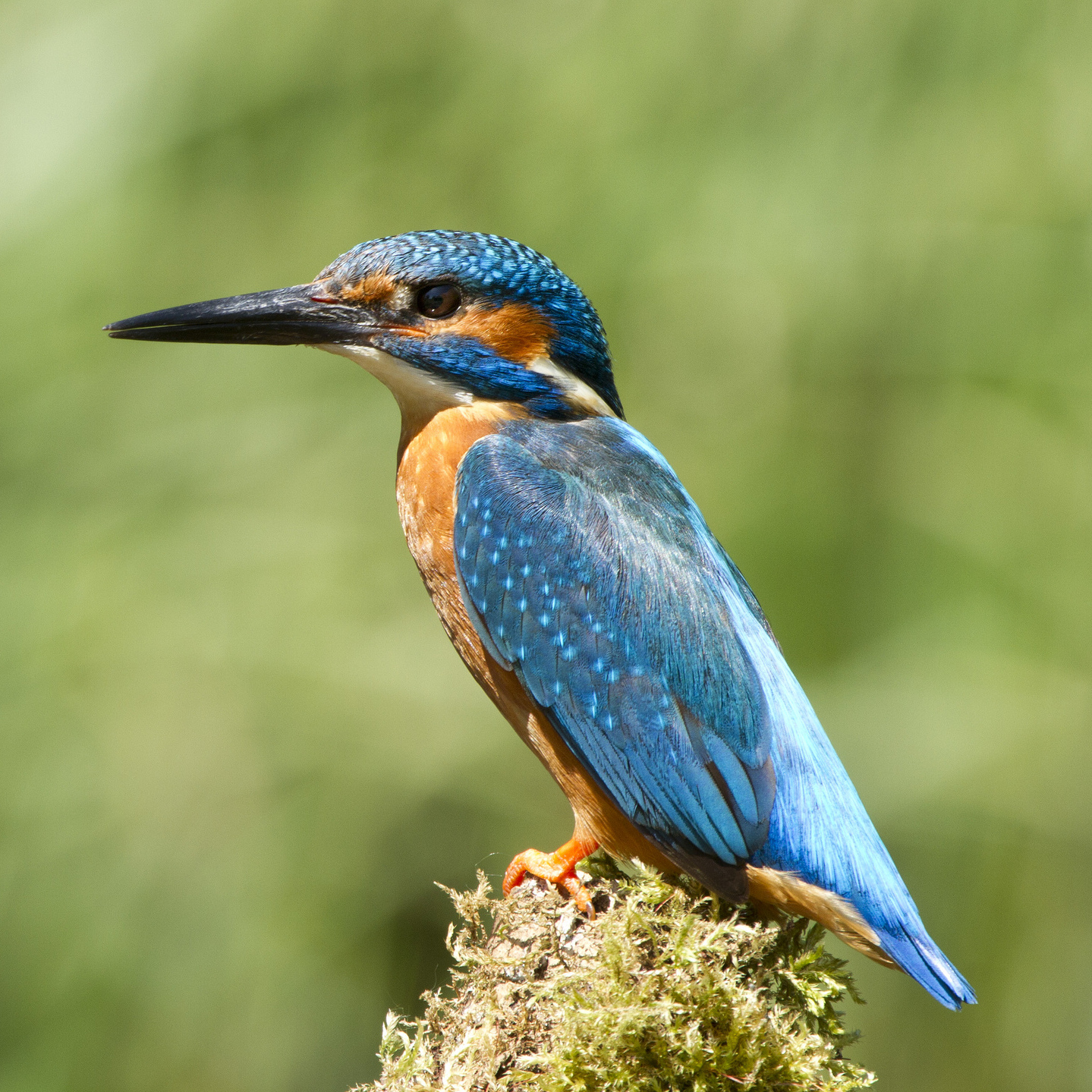
Common Kingfisher Facts Alcedo atthis
Common kingfishers are compact blue-and-orange birds that hunt along slow rivers and lakes. They watch from low perches before diving headfirst to catch small fish.
- Habitat
- Freshwater
- Diet
- Small fish and aquatic invertebrates
- Lifespan
- 6–7 years
Classification
Family: Alcedinidae. Order: Coraciiformes.
Common Kingfisher Habitat
Common Kingfishers live in Freshwater and Wetland habitats. Their recorded range includes Europe, Asia, and North Africa. Suitable food, shelter, and conditions for raising young help shape that range.
What Do Common Kingfishers Eat?
Diet classification: Carnivore. Recorded foods: Small fish and aquatic invertebrates.
Common Kingfisher Lifespan, Size, and Weight
Recorded lifespan: 6–7 years. Recorded size: 16–17 cm. Recorded weight: 34–46 g.
Common Kingfisher Conservation Status
Common Kingfisher is listed here as Least Concern. Protecting habitat, maintaining healthy prey or food sources, and reducing human pressure are important parts of conserving wild populations.
Quick facts
- Region
- Europe, Asia, and North Africa
- Habitat
- Freshwater, Wetland
- Diet
- Carnivore
- Lifespan
- 6–7 years
- Size
- 16–17 cm
- Weight
- 34–46 g
Fun facts
- Their blue feathers contain microscopic structures that scatter light rather than blue pigment.
- A third transparent eyelid protects the eyes during underwater dives.
- They nest in tunnels excavated into vertical riverbanks.
- Young birds have paler feet and duller plumage than adults.
Explore related categories
Discover more with the random animal generator or browse all animal profiles.
Similar animals
Explore nearby branches of the animal world.
Ready for another discovery?
The animal kingdom is full of surprises.
Sources and image credit
Animal facts are reviewed against the references below. The photograph remains available under the stated license.