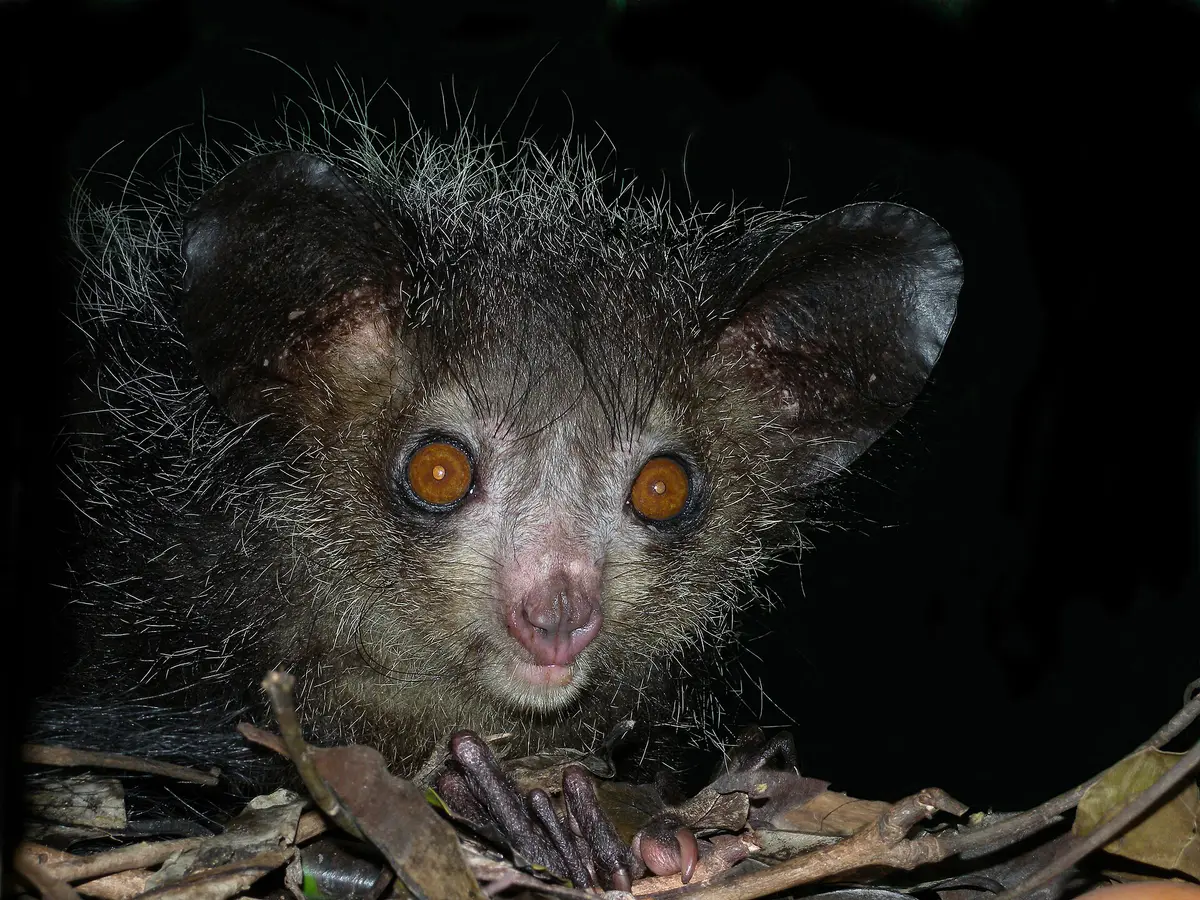
Mammal
aye-aye Facts Daubentonia madagascariensis
- Diet
- The aye-aye is an omnivore and commonly eats seeds, nuts, fruits, nectar, plant exudates and fungi, but also xylophagous, or wood boring, insect larvae (especially cerambycid beetle larvae) and honey.
- Lifespan
- Up to 32.3 years (maximum recorded longevity)
Classification
Family: Daubentoniidae. Order: Primates.
What Do aye-ayes Eat?
Diet classification: Herbivore. Recorded foods: the aye-aye is an omnivore and commonly eats seeds, nuts, fruits, nectar, plant exudates and fungi, but also xylophagous, or wood boring, insect larvae (especially cerambycid beetle larvae) and honey.
aye-aye Conservation Status
aye-aye is listed here as Endangered. Protecting habitat, maintaining healthy prey or food sources, and reducing human pressure are important parts of conserving wild populations.
Quick facts
- Diet
- Herbivore
- Lifespan
- Up to 32.3 years (maximum recorded longevity)
- Weight
- 2.5 kg
Fun facts
- Aye-aye are solitary animals that mark their large home range with scent.
- During the day, aye-ayes sleep in spherical nests in the forks of tree branches that are constructed out of leaves, branches and vines before emerging after dark to begin their hunt for food.
- During the period of parenting, a female becomes the dominant figure over males, likely to secure better access to food while caring for her young.
Explore related categories
Discover more with the random animal generator or browse all animal profiles.
Similar animals
Explore nearby branches of the animal world.
Ready for another discovery?
The animal kingdom is full of surprises.
Sources and image credit
Animal facts are reviewed against the references below. The photograph remains available under the stated license.