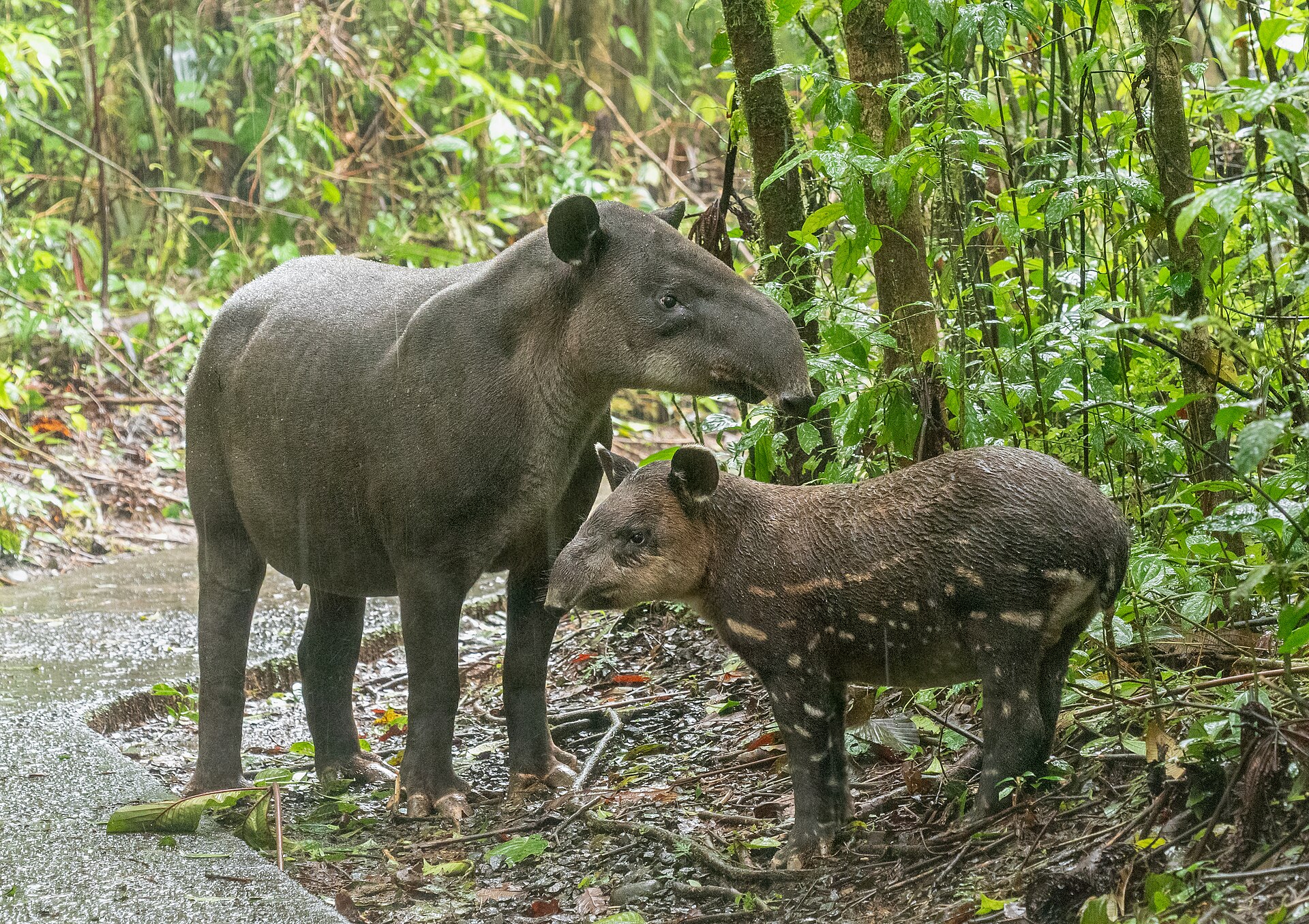
Baird's tapir Facts Tapirus bairdii
The Baird's tapir (Tapirus bairdii), also known as the Central American tapir, is a species of tapir native to Mexico, Central America, and northwestern South America.
- Diet
- Leaves from an assortment of plant types provide the greater part of their eating regimen, yet they likewise eat twigs, blossoms, hedges, grasses, and fruits.
Classification
Family: Tapiridae. Order: Perissodactyla.
What Do Baird's tapirs Eat?
Diet classification: Herbivore. Recorded foods: Leaves from an assortment of plant types provide the greater part of their eating regimen, yet they likewise eat twigs, blossoms, hedges, grasses, and fruits.
Baird's tapir Conservation Status
Baird's tapir is listed here as Endangered. Protecting habitat, maintaining healthy prey or food sources, and reducing human pressure are important parts of conserving wild populations.
Quick facts
- Diet
- Herbivore
- Weight
- 300 kg
Fun facts
- It forages for leaves and fallen fruit, using well-worn tapir paths which zigzag through the thick undergrowth of the forest.
- The Baird's tapir may be active at all hours, but is primarily nocturnal.
- When in danger, these animals will seek water.
Explore related categories
Discover more with the random animal generator or browse all animal profiles.
Similar animals
Explore nearby branches of the animal world.

Ready for another discovery?
The animal kingdom is full of surprises.
Sources and image credit
Animal facts are reviewed against the references below. The photograph remains available under the stated license.