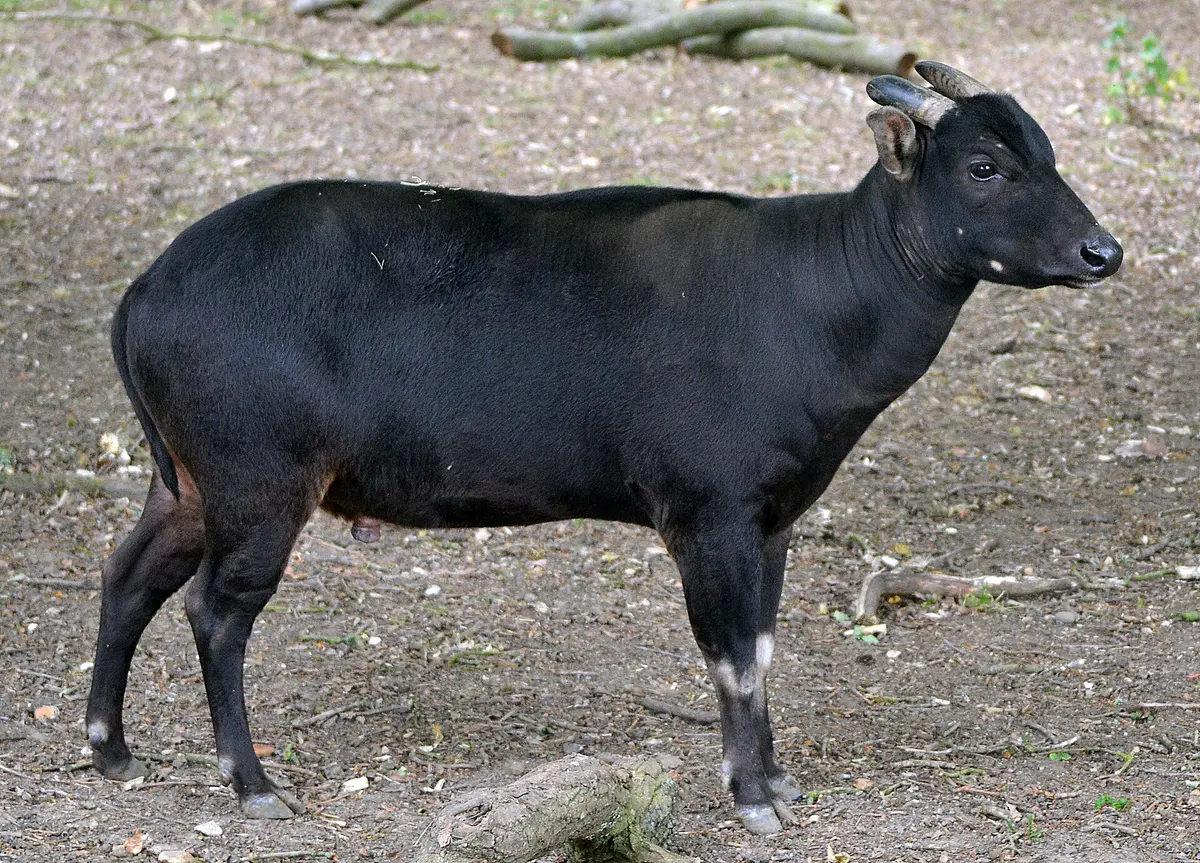
Lowland Anoa Facts Bubalus depressicornis
The lowland anoa is a small wild buffalo endemic to Sulawesi, Indonesia, where it lives mainly in dense tropical forest and wet lowland habitats.
- Habitat
- Tropical Forest
- Diet
- Leaves, shoots, young twigs, ferns, grasses and fallen fruit
- Lifespan
- Up to 36.1 years (maximum recorded longevity)
Classification
Family: Bovidae. Order: Artiodactyla.
Lowland Anoa Habitat
Lowland Anoas live in Tropical Forest and Swamp and Mangrove habitats. Their recorded range includes Sulawesi, Indonesia. Suitable food, shelter, and conditions for raising young help shape that range.
What Do Lowland Anoas Eat?
Diet classification: Herbivore. Recorded foods: Leaves, shoots, young twigs, ferns, grasses and fallen fruit.
Lowland Anoa Lifespan, Size, and Weight
Recorded lifespan: Up to 36.1 years (maximum recorded longevity). Recorded size: About 122–188 cm head-body length; adults average about 86 cm at the shoulder. Recorded weight: 300 kg.
Lowland Anoa Conservation Status
Lowland Anoa is listed here as Endangered. Protecting habitat, maintaining healthy prey or food sources, and reducing human pressure are important parts of conserving wild populations.
Quick facts
- Region
- Sulawesi, Indonesia
- Habitat
- Tropical Forest, Swamp, Mangrove
- Diet
- Herbivore
- Lifespan
- Up to 36.1 years (maximum recorded longevity)
- Size
- About 122–188 cm head-body length; adults average about 86 cm at the shoulder
- Weight
- 300 kg
Fun facts
- Lowland anoas are dwarf wild buffalo found only on Sulawesi and nearby parts of Indonesia.
- Their backward-pointing horns help them move through dense forest undergrowth without snagging vegetation.
- Recent feeding research found intact fruit seeds in their droppings, indicating that anoas can help disperse forest plants.
Explore related categories
Discover more with the random animal generator or browse all animal profiles.
Similar animals
Explore nearby branches of the animal world.
Ready for another discovery?
The animal kingdom is full of surprises.
Sources and image credit
Animal facts are reviewed against the references below. The photograph remains available under the stated license.