About the Borneo Bay Cat
The Borneo bay cat, Catopuma badia, is a small wild cat found only on Borneo. It is one of the least documented cat species: sightings and camera-trap records are rare, and basic facts about its ecology remain uncertain. This profile distinguishes confirmed observations from estimates and unknowns, because a precise-looking number can hide how little direct evidence exists.
A cat known only from Borneo
The Borneo bay cat is endemic to Borneo, which means the species is native to that island and is not naturally found elsewhere. The IUCN Cat Specialist Group reports confirmed records from several parts of Borneo, but the distribution remains poorly understood. Older museum specimens came mainly from northern and eastern parts of the island; later camera-trap studies added records from other regions.
The species was described in 1874 from a skull associated with a specimen collected in 1855. For many years, naturalists had very little material to study. The first photograph of a wild individual was taken in 1998, and the first camera-trap record followed in 2002. Those dates help explain why the bay cat is still poorly understood even though it has been known to science for more than a century.
Appearance and identification
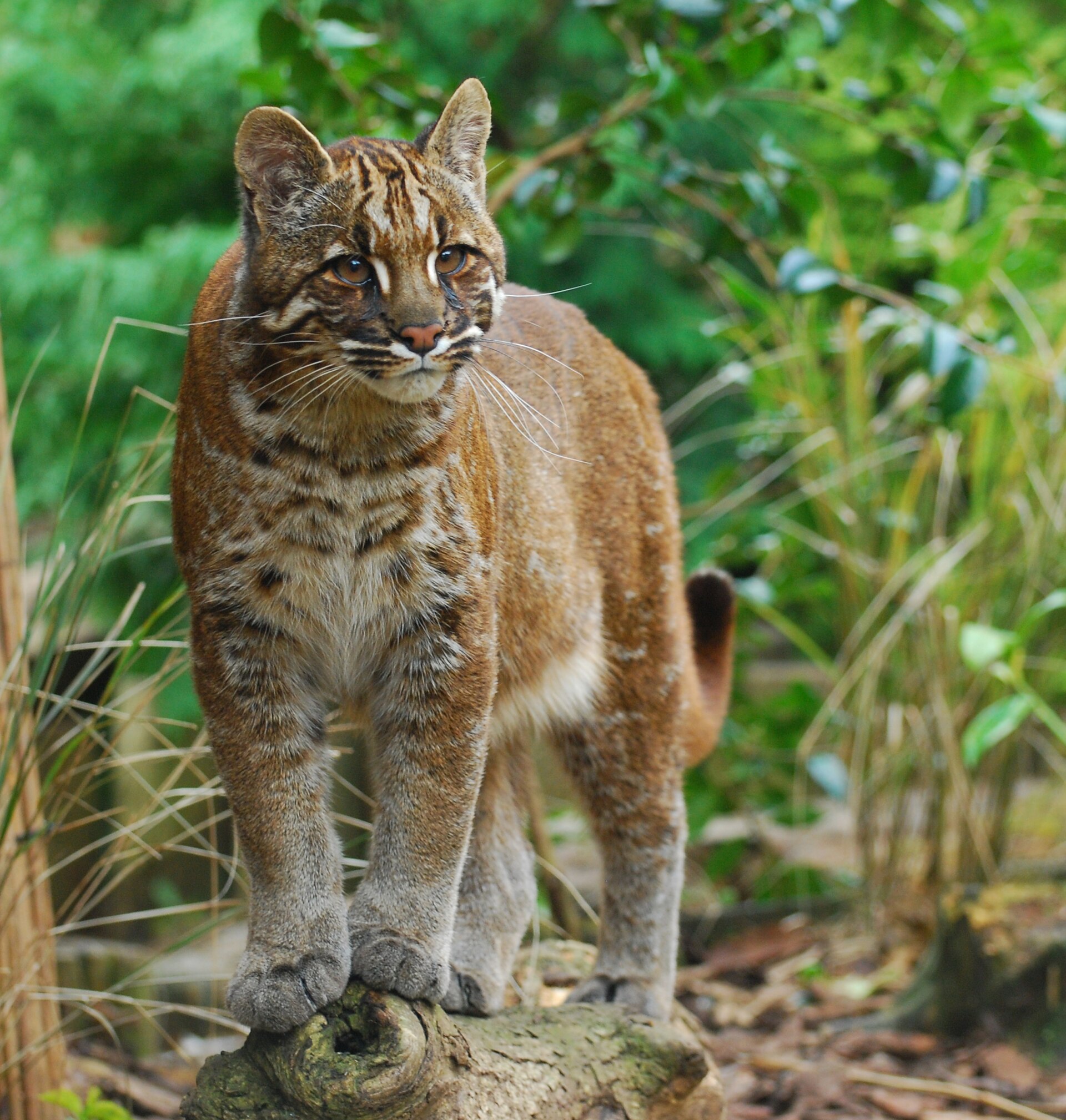
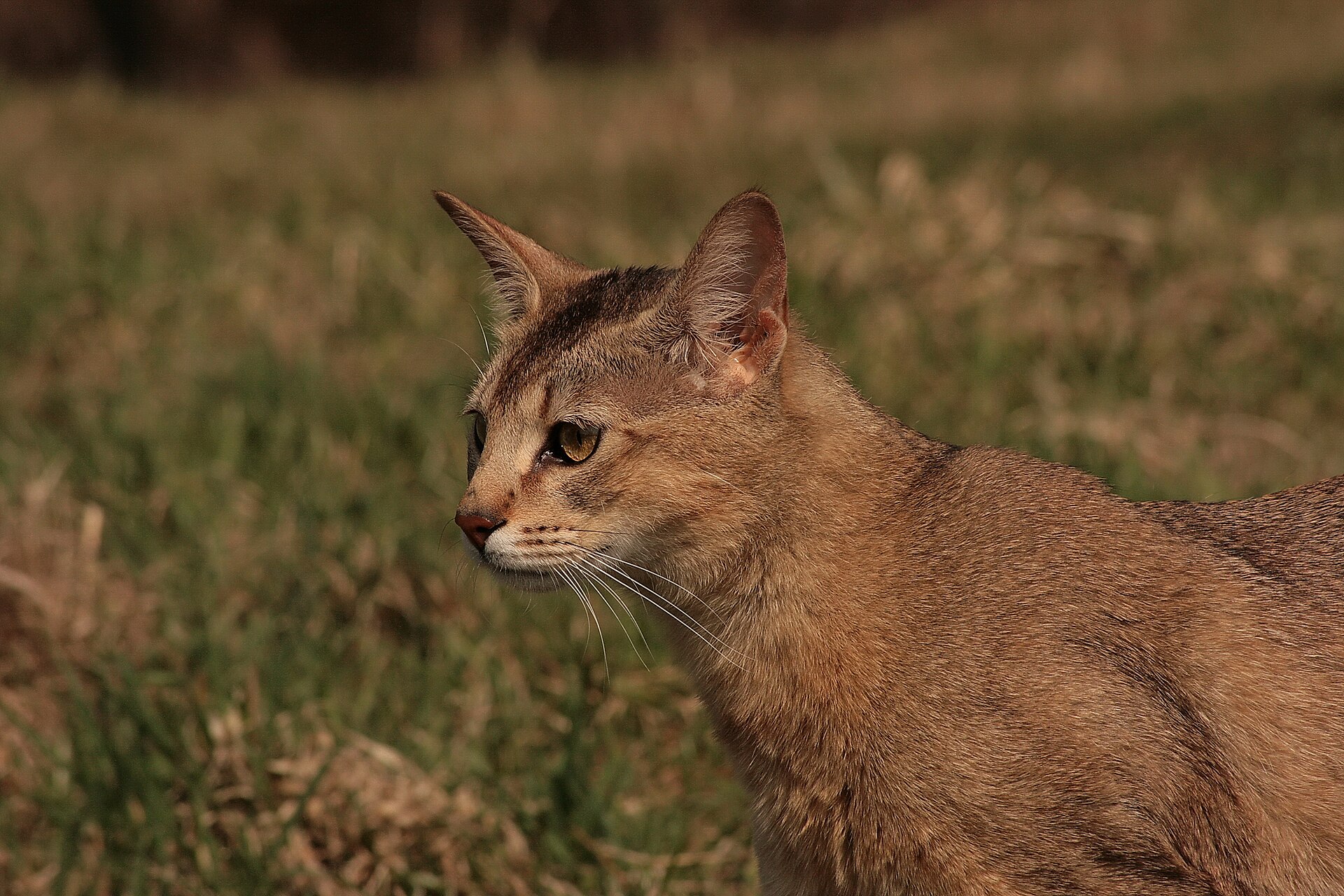
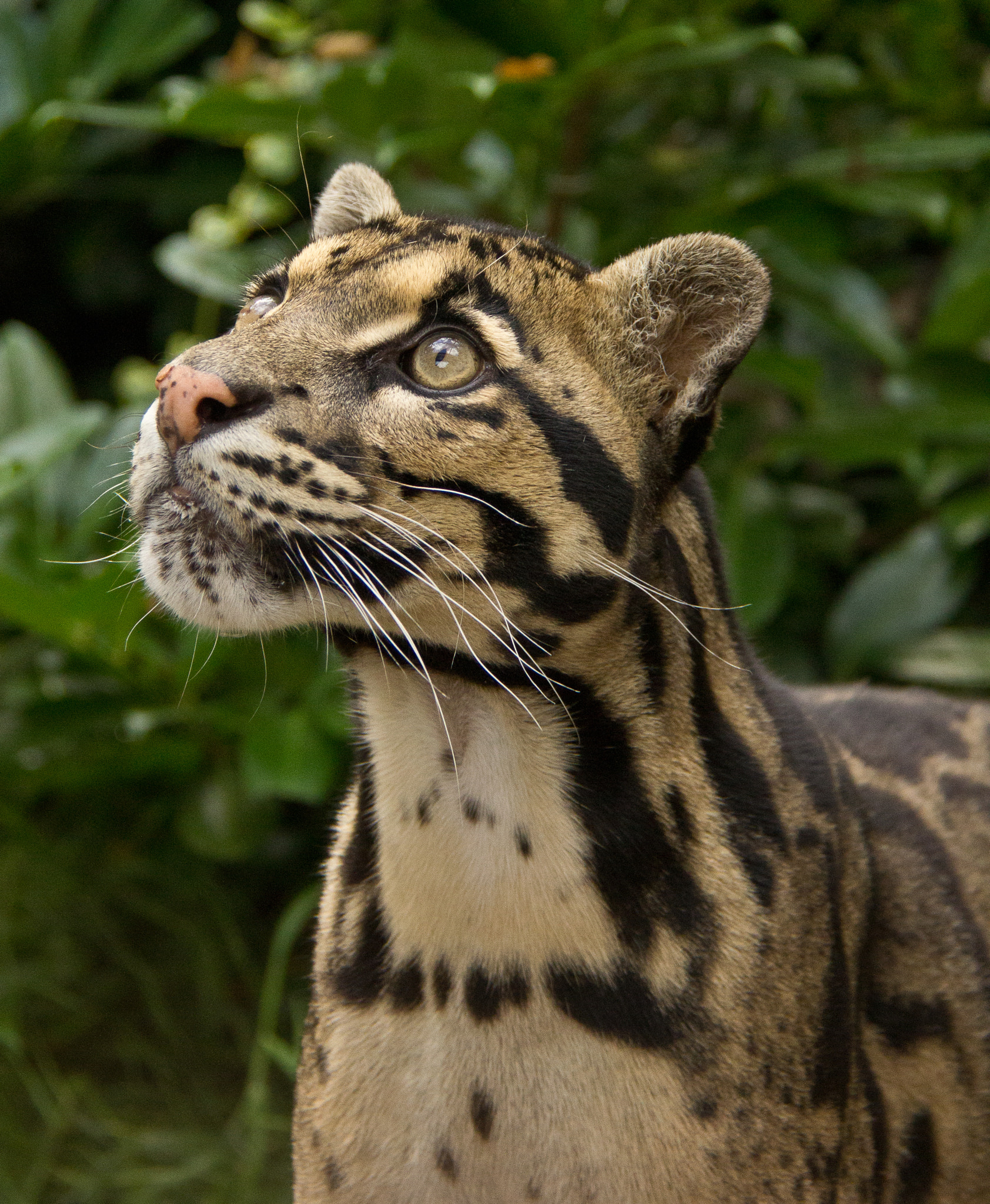
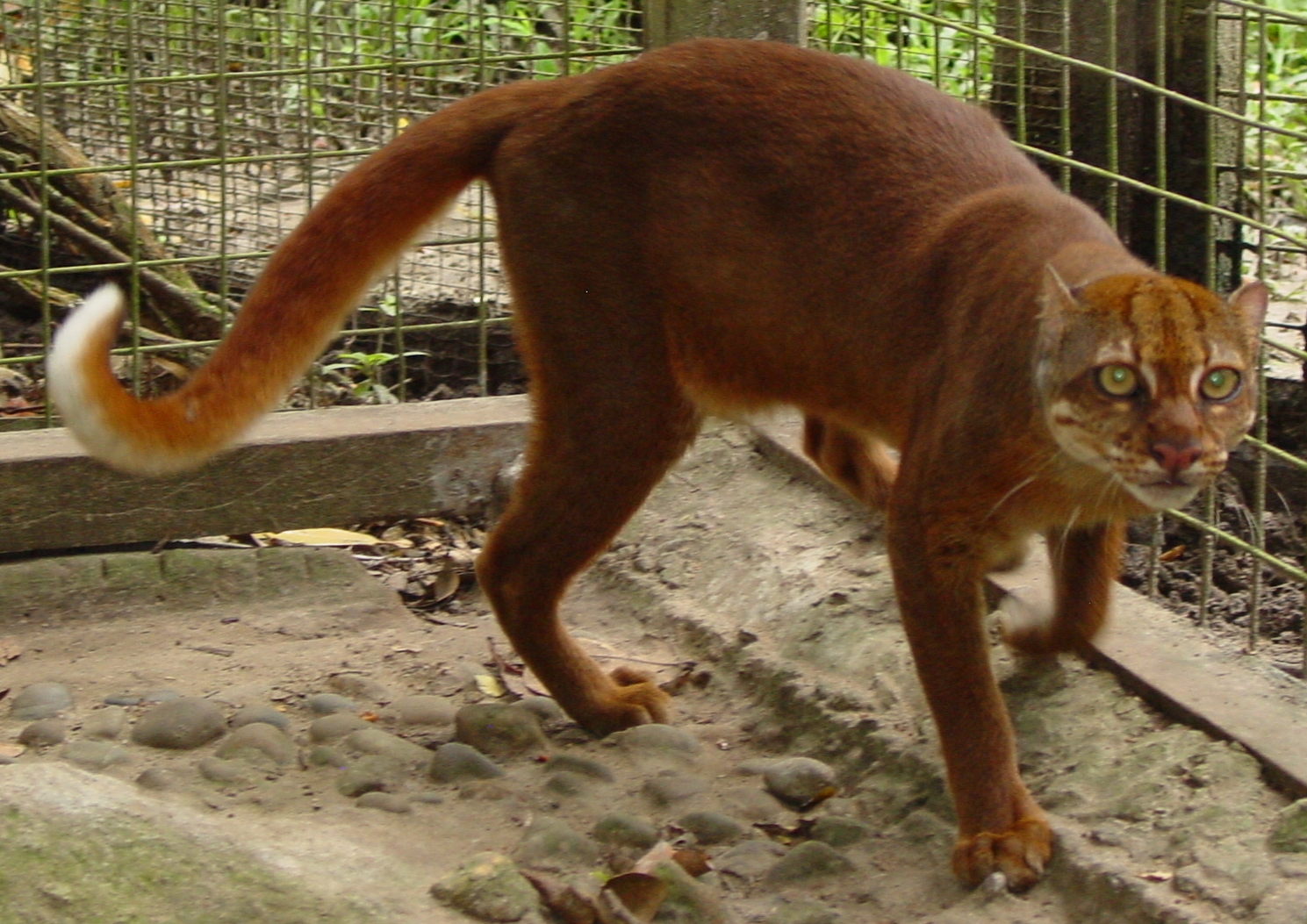
The Borneo bay cat is a compact cat with a rounded head, small rounded ears, and a long tail. Chestnut-red fur is common, but grey and black individuals have also been recorded. A female examined in 1992 had faint dark markings, and camera traps later photographed a black-coated individual with reddish colour on its tail. These observations show that coat colour varies; colour alone is not enough to identify a wild cat.
The Cat Specialist Group describes a pale underside, a light stripe below the tail, subtle cheek markings, and darker backs of the ears. A dark M-shaped marking on the back of the head is also described. Not every field photograph shows all of these details. Distance, lighting, motion, and the angle of the camera can hide markings, so expert identification uses the complete image and location evidence rather than one colour patch.
What is known about its size
Published measurements are based on very few animals. The Cat Specialist Group gives a body length of about 53–67 cm and a tail length of about 32–40 cm. It lists weight at roughly 3–4 kg. One female captured in 1992 weighed 1.95 kg when near death; the account estimates she may have weighed 3–4 kg when healthy. This is a single observation and an estimate, not a large sample of adult weights.
The same source lists longevity and litter size as unknown. Those gaps matter: they prevent researchers from calculating survival rates or reproductive output with confidence. A profile should not fill those fields with a number borrowed from a related cat. Until more observations are available, “unknown” is more accurate than an invented or assumed value.
Forest habitat
Available records suggest that the Borneo bay cat depends on natural or semi-natural forest. Observations come from lowland and hill dipterocarp forests, including both primary forest and forest degraded by logging. Records also include rehabilitated forest and a mosaic of heath and peat-swamp forest. The species has been recorded from about 55 m to 1,460 m above sea level, with a higher report that remains unconfirmed.
Some historical records came from near rivers and wetlands, but the specialist account cautions that researchers cannot tell whether the cat truly prefers those places or whether collectors and camera teams were more likely to look there. Bay cats were not photographed in two camera-trap surveys of Sabah oil-palm plantations. That observation is consistent with forest dependence, but it does not by itself prove that the animal can never cross or use a modified landscape.
Behaviour and prey remain uncertain
There is very little direct information about the bay cat’s daily behaviour, social life, or territory size. Researchers once thought it was nocturnal. More recent camera-trap images show activity during the day and sometimes at night, so a simple day-or-night label would be misleading. All available photographs show one animal at a time, which suggests a solitary way of life but does not establish how individuals behave when they meet.
No field study has identified the species’ regular prey. It is classified as a carnivorous cat, but the specialist account says specific prey species are unknown. Researchers should not present guesses about rodents, birds, or other animals as confirmed diet facts. The lack of prey data is a research gap, not evidence that the cat has no particular ecological needs.
Endangered status and population estimates
The Cat Specialist Group reports the species as Endangered on the IUCN Red List. There are no reliable population-density estimates, and the cat is detected infrequently during wildlife surveys. A figure of roughly 2,200 mature individuals appears in the assessment, but it is a model-based estimate that assumes a density of one animal per 100 square kilometres. It is not a census or a direct count.
The number of confirmed records has increased as camera-trap work has expanded. At the same time, low detection rates make it difficult to distinguish rarity from elusive behaviour or survey limitations. Researchers still need more information about distribution, abundance, habitat use, reproduction, and survival before they can describe population trends with confidence.
Threats and conservation needs
The strongest documented concern is forest loss. Logging and conversion of forest to oil-palm or other agricultural plantations reduce or divide the habitat on which the bay cat appears to depend. The specialist account also discusses possible capture for the wildlife trade and accidental snaring. It cautions that the full effect of these threats is not well known, which makes careful monitoring important.
The species is listed in CITES Appendix II, and the Cat Specialist Group reports legal protection across much of its range. The conservation priorities it identifies include protecting forest and improving knowledge of the cat’s distribution and ecology. Researchers need enough well-placed surveys to identify important areas and track changes; a few photographs cannot answer all of those questions. Conservation summaries should therefore state both the known pressures and the remaining uncertainty.
Common questions
Where does the Borneo bay cat live?
It is endemic to Borneo. Confirmed records come from multiple parts of the island, but its full distribution is still poorly understood.
What does the Borneo bay cat eat?
Its specific prey has not been documented by field studies. The available specialist account identifies diet as an important unknown.
Is the estimate of 2,200 cats a census?
No. It is a model-based estimate of mature individuals that depends on an assumed density. Researchers do not have a direct population count or density estimate.