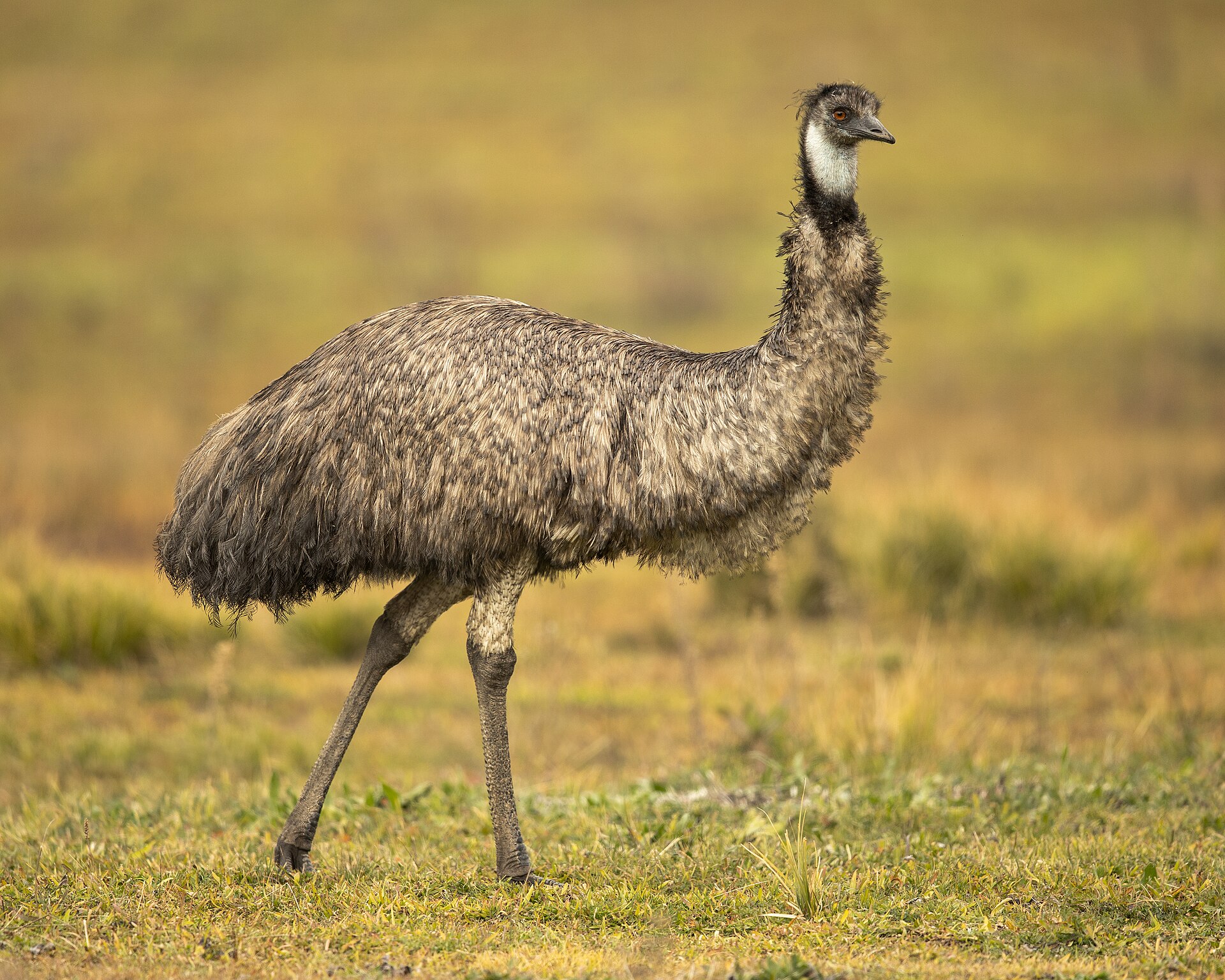
Bird
Emu Facts Dromaius novaehollandiae
- Diet
- They are generally gregarious birds apart from the breeding season, and while some forage, others remain vigilant to their mutual benefit.
- Lifespan
- Up to 16.6 years (maximum recorded longevity)
Classification
Family: Dromaiidae. Order: Casuariiformes.
What Do Emus Eat?
Diet classification: Herbivore. Recorded foods: They are generally gregarious birds apart from the breeding season, and while some forage, others remain vigilant to their mutual benefit.
Emu Conservation Status
Emu is listed here as Least Concern. Protecting habitat, maintaining healthy prey or food sources, and reducing human pressure are important parts of conserving wild populations.
Quick facts
- Diet
- Herbivore
- Lifespan
- Up to 16.6 years (maximum recorded longevity)
- Weight
- 34.09 kg
Fun facts
- Emus are diurnal birds and spend their day foraging, preening their plumage with their beak, dust bathing and resting.
- They are able to swim when necessary, although they rarely do so unless the area is flooded or they need to cross a river.
- They are generally gregarious birds apart from the breeding season, and while some forage, others remain vigilant to their mutual benefit.
Explore related categories
Discover more with the random animal generator or browse all animal profiles.
Similar animals
Explore nearby branches of the animal world.
Ready for another discovery?
The animal kingdom is full of surprises.
Sources and image credit
Animal facts are reviewed against the references below. The photograph remains available under the stated license.