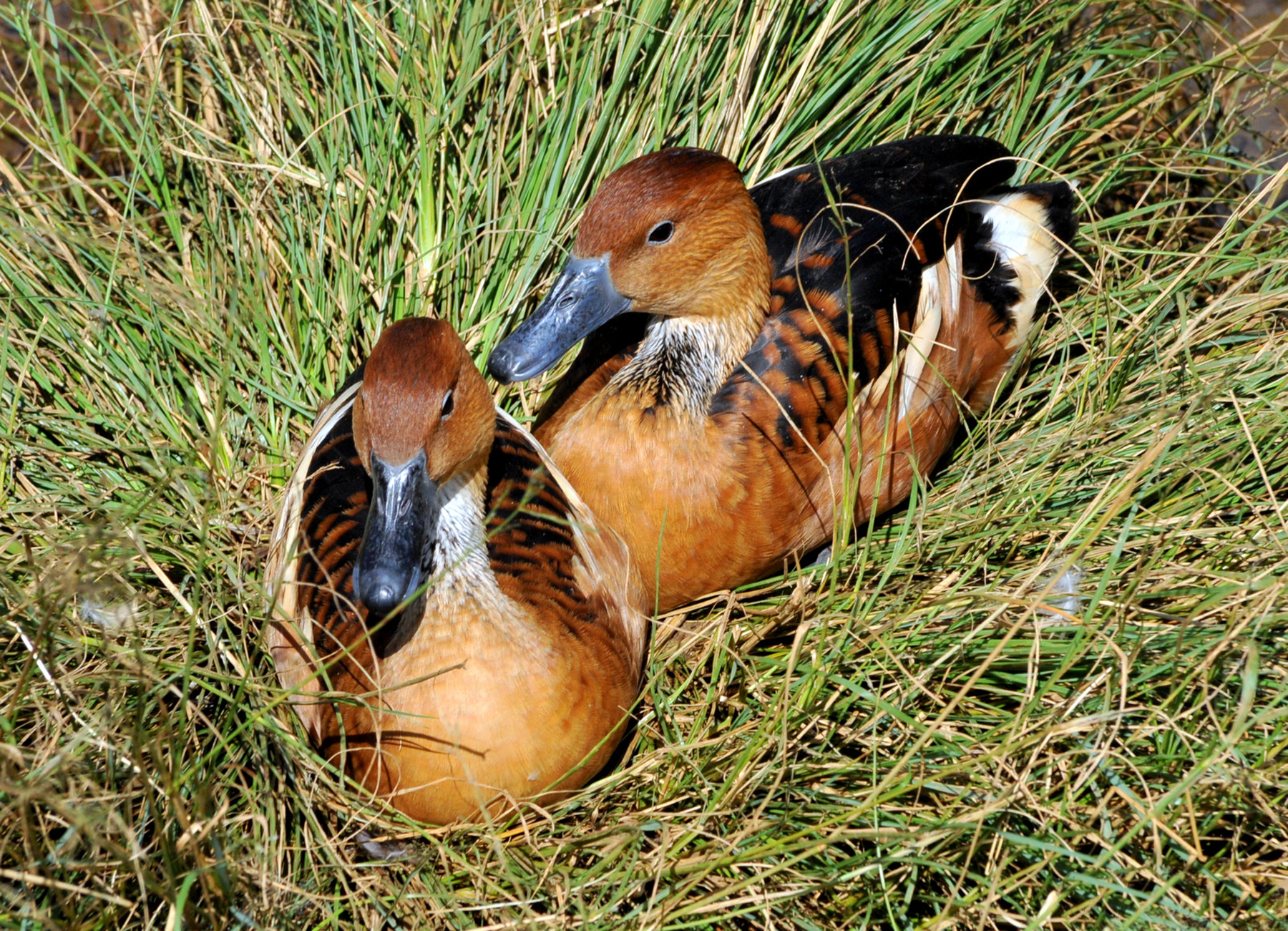
Fulvous Whistling Duck Facts Dendrocygna bicolor
The fulvous whistling duck or fulvous tree duck (Dendrocygna bicolor) is a species of whistling duck that breeds across the world's tropical regions in much of Mexico and South America, the West Indies, the southern United States, sub-Saharan Africa and the Indian subcontinent. It has plumage that is mainly reddish brown, long legs and a long grey bill, and shows a distinctive white band across its black tail in flight.
- Habitat
- Mountain
- Diet
- The fulvous whistling duck feeds in wetlands by day or night, often in mixed flocks with relatives such as white-faced or black-bellied whistling ducks.
Classification
Family: Anatidae. Order: Anseriformes.
What Do Fulvous Whistling Ducks Eat?
Diet classification: Herbivore. Recorded foods: the fulvous whistling duck feeds in wetlands by day or night, often in mixed flocks with relatives such as white-faced or black-bellied whistling ducks.
Fulvous Whistling Duck Conservation Status
Fulvous Whistling Duck is listed here as Least Concern. Protecting habitat, maintaining healthy prey or food sources, and reducing human pressure are important parts of conserving wild populations.
Quick facts
- Habitat
- Mountain
- Diet
- Herbivore
- Weight
- 756.37 g
Fun facts
- It does not often perch in trees, unlike other whistling ducks.
- They are noisy and display their aggression towards other individuals by throwing back their heads.
- This species is usually found in small groups, but substantial flocks can form at favoured sites.
Explore related categories
Discover more with the random animal generator or browse all animal profiles.
Similar animals
Explore nearby branches of the animal world.
Ready for another discovery?
The animal kingdom is full of surprises.
Sources and image credit
Animal facts are reviewed against the references below. The photograph remains available under the stated license.