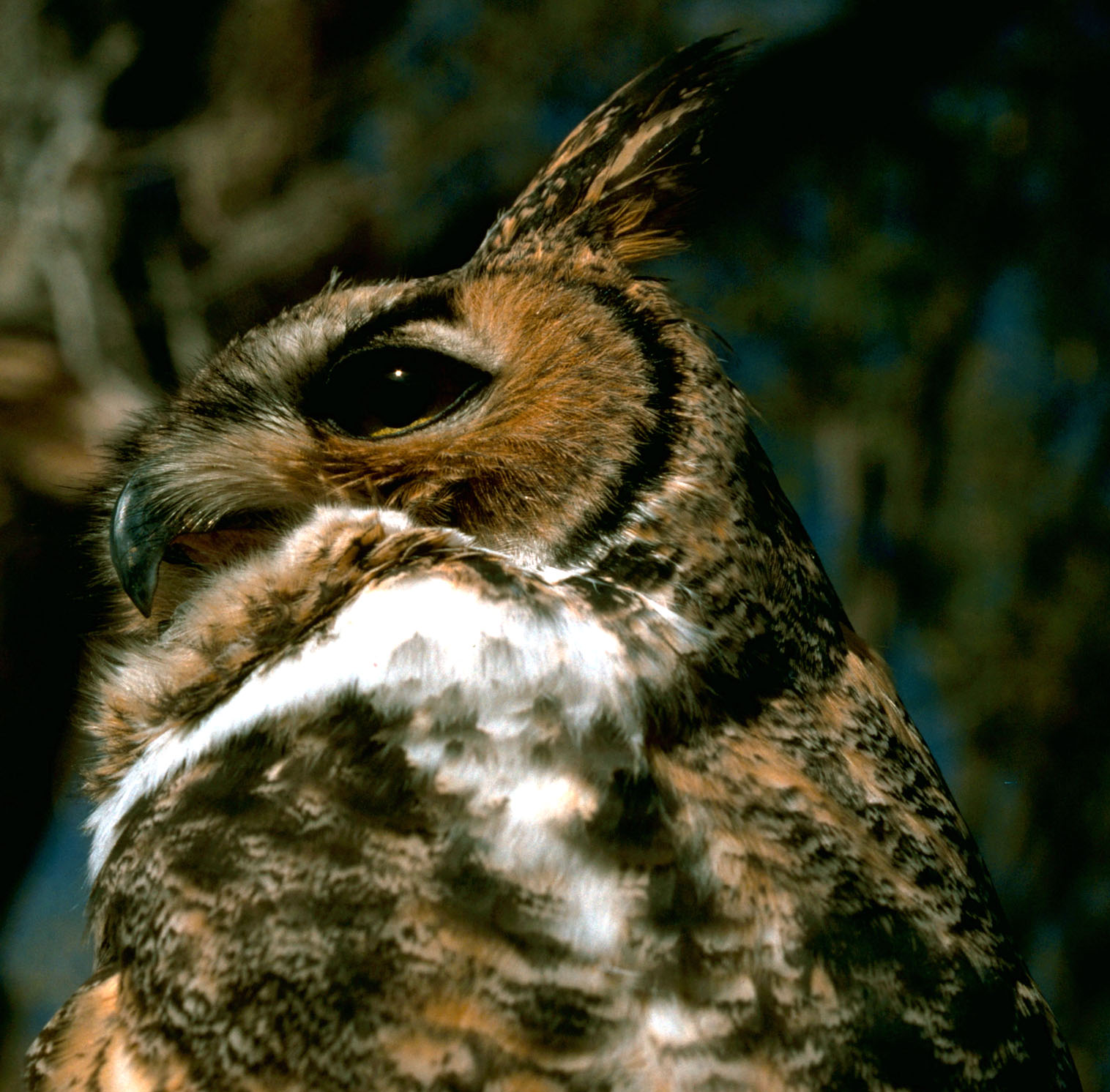
Great Horned Owl Facts Bubo virginianus
Great horned owls are adaptable nocturnal predators found from Arctic woodland to tropical forest and city parks. Powerful talons and near-silent flight allow them to take an unusually broad range of prey.
- Habitat
- Forest
- Diet
- Rodents, rabbits, birds, reptiles, and other small animals
- Lifespan
- 13–28 years
Classification
Family: Strigidae. Order: Strigiformes.
Great Horned Owl Habitat
Great Horned Owls live in Forest and Grassland and Urban habitats. Their recorded range includes the Americas. Suitable food, shelter, and conditions for raising young help shape that range.
What Do Great Horned Owls Eat?
Diet classification: Carnivore. Recorded foods: Rodents, rabbits, birds, reptiles, and other small animals.
Great Horned Owl Lifespan, Size, and Weight
Recorded lifespan: 13–28 years. Recorded size: 46–64 cm. Recorded weight: 0.9–2.5 kg.
Great Horned Owl Conservation Status
Great Horned Owl is listed here as Least Concern. Protecting habitat, maintaining healthy prey or food sources, and reducing human pressure are important parts of conserving wild populations.
Quick facts
- Region
- The Americas
- Habitat
- Forest, Grassland, Urban
- Diet
- Carnivore
- Lifespan
- 13–28 years
- Size
- 46–64 cm
- Weight
- 0.9–2.5 kg
Fun facts
- The horn-like tufts on the head are feathers rather than ears.
- Soft-edged flight feathers reduce turbulence and help muffle wing noise.
- Females are generally larger than males, as in many birds of prey.
- They often reuse nests built by hawks, crows, or other large birds.
Explore related categories
Discover more with the random animal generator or browse all animal profiles.
Similar animals
Explore nearby branches of the animal world.
Ready for another discovery?
The animal kingdom is full of surprises.
Sources and image credit
Animal facts are reviewed against the references below. The photograph remains available under the stated license.