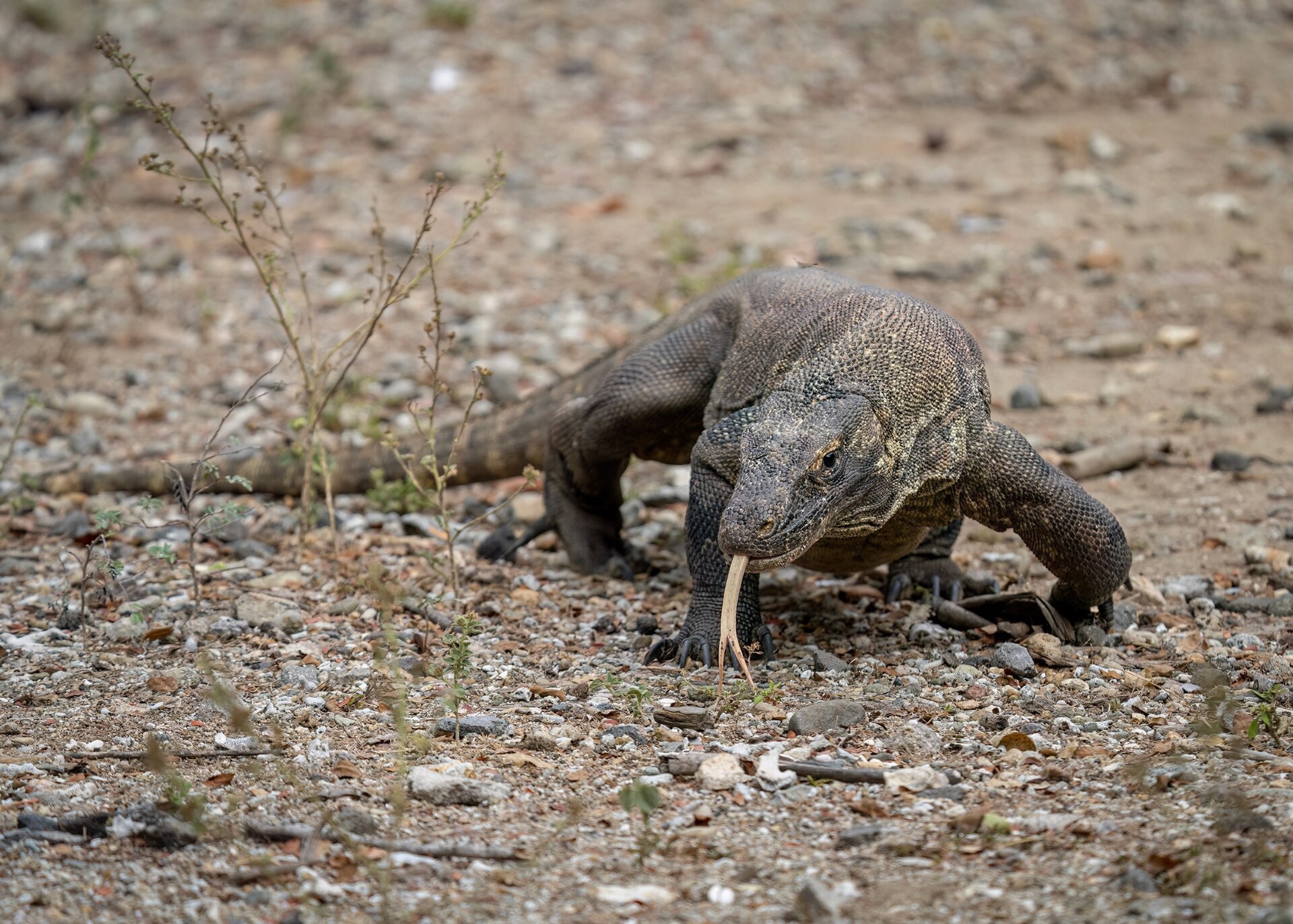
Komodo Dragon Facts Varanus komodoensis
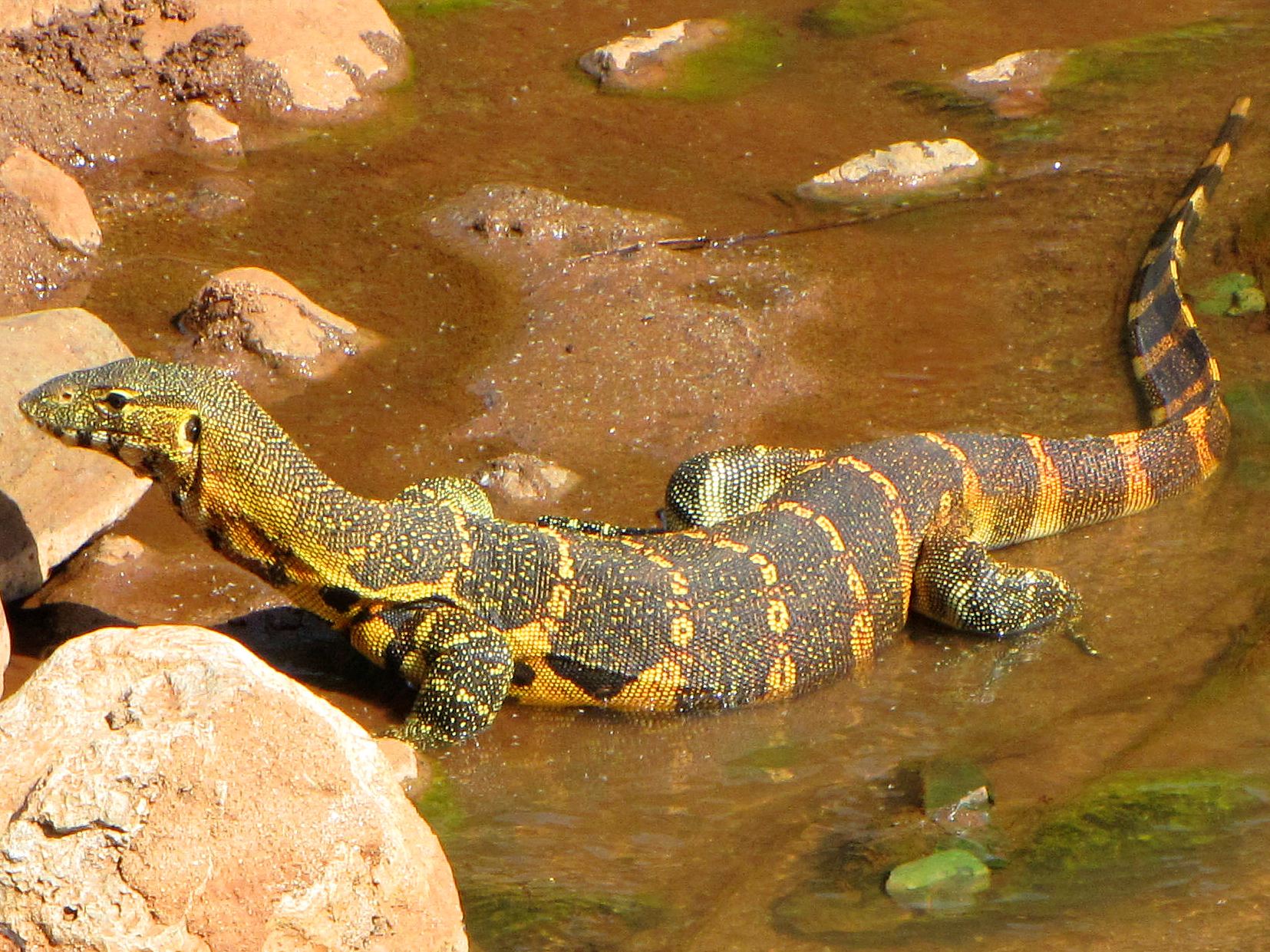
Komodo dragons are the world's largest living lizards and occur naturally on a small group of Indonesian islands. Their muscular bodies, serrated teeth, and venom help subdue large prey.
- Habitat
- Savanna
- Diet
- Deer, pigs, smaller reptiles, and carrion
- Lifespan
- 20–30 years
Classification
Family: Varanidae. Order: Squamata.
Komodo Dragon Habitat
Komodo Dragons live in Savanna and Dry Forest habitats. Their recorded range includes Indonesia. Suitable food, shelter, and conditions for raising young help shape that range.
What Do Komodo Dragons Eat?
Diet classification: Carnivore. Recorded foods: Deer, pigs, smaller reptiles, and carrion.
Komodo Dragon Lifespan, Size, and Weight
Recorded lifespan: 20–30 years. Recorded size: 200–300 cm. Recorded weight: 70–90 kg.
Komodo Dragon Conservation Status
Komodo Dragon is listed here as Endangered. Protecting habitat, maintaining healthy prey or food sources, and reducing human pressure are important parts of conserving wild populations.
Quick facts
- Region
- Indonesia
- Habitat
- Savanna, Dry Forest
- Diet
- Carnivore
- Lifespan
- 20–30 years
- Size
- 200–300 cm
- Weight
- 70–90 kg
Fun facts
- Adults can consume a large fraction of their body mass in one meal.
- A forked tongue collects scent particles and delivers them to a sensory organ in the mouth.
- Young dragons spend more time in trees to avoid larger adults.
- Females can reproduce without fertilisation through parthenogenesis.
Explore related categories
Discover more with the random animal generator or browse all animal profiles.
Similar animals
Explore nearby branches of the animal world.
Ready for another discovery?
The animal kingdom is full of surprises.
Sources and image credit
Animal facts are reviewed against the references below. The photograph remains available under the stated license.