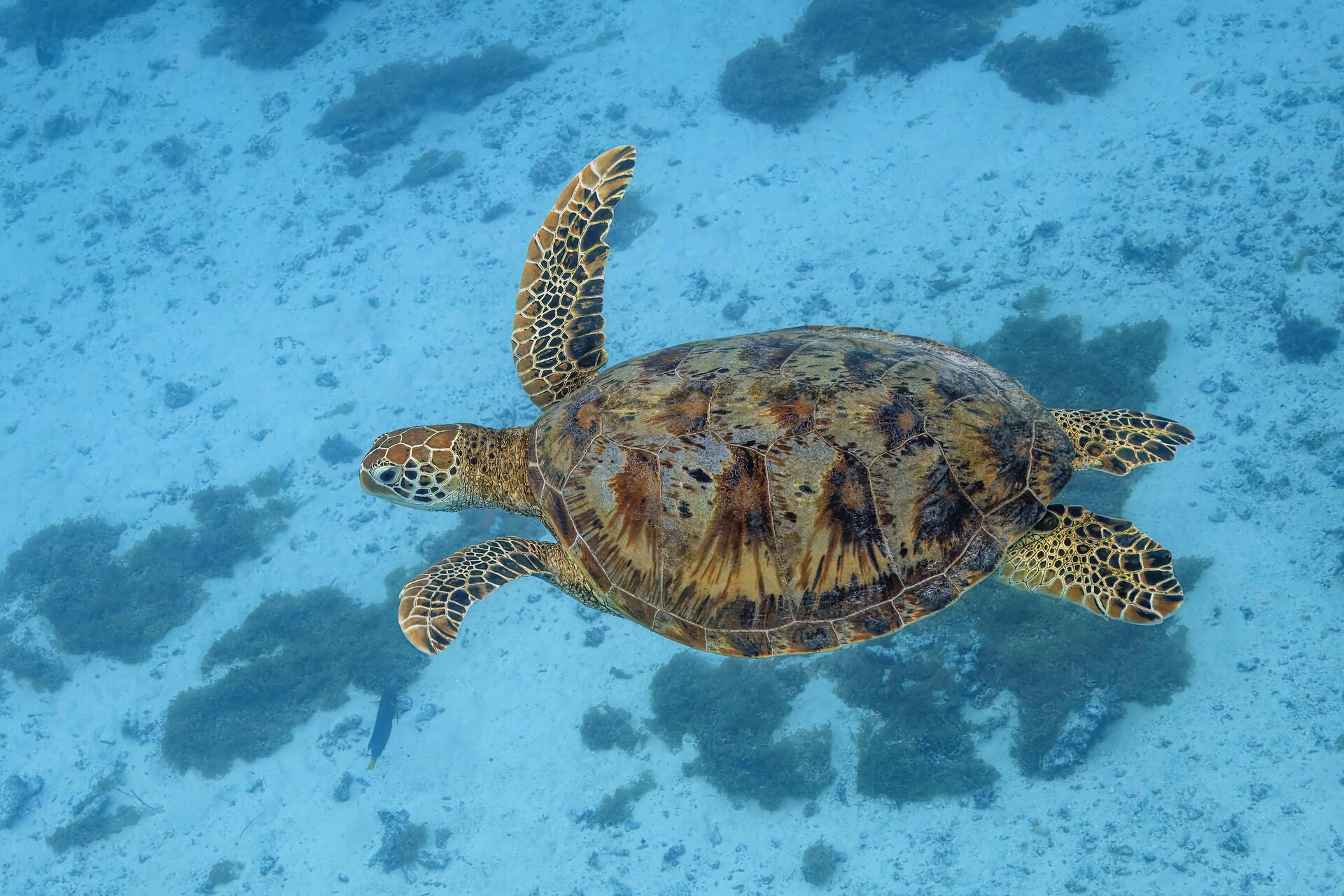
Green Sea Turtle Facts Chelonia mydas
Green sea turtles are large marine reptiles that migrate between feeding grounds and nesting beaches. Adults graze on seagrass and help maintain productive coastal meadows.
- Habitat
- Marine
- Diet
- Seagrass and algae; juveniles also eat small animals
- Lifespan
- 60–70 years
Classification
Family: Cheloniidae. Order: Testudines.
Green Sea Turtle Habitat
Green Sea Turtles live in Marine and Coastal habitats. Their recorded range includes Tropical and subtropical oceans. Suitable food, shelter, and conditions for raising young help shape that range.
What Do Green Sea Turtles Eat?
Diet classification: Herbivore. Recorded foods: Seagrass and algae; juveniles also eat small animals.
Green Sea Turtle Lifespan, Size, and Weight
Recorded lifespan: 60–70 years. Recorded size: 80–120 cm. Recorded weight: 65–130 kg.
Green Sea Turtle Conservation Status
Green Sea Turtle is listed here as Endangered. Protecting habitat, maintaining healthy prey or food sources, and reducing human pressure are important parts of conserving wild populations.
Quick facts
- Region
- Tropical and subtropical oceans
- Habitat
- Marine, Coastal
- Diet
- Herbivore
- Lifespan
- 60–70 years
- Size
- 80–120 cm
- Weight
- 65–130 kg
Fun facts
- Females often return to the region where they hatched to lay eggs.
- Their name refers to the colour of body fat, not the shell.
- Salt glands near the eyes remove excess salt from seawater.
- Adults can travel long distances between feeding and nesting areas.
Explore related categories
Discover more with the random animal generator or browse all animal profiles.
Similar animals
Explore nearby branches of the animal world.
Ready for another discovery?
The animal kingdom is full of surprises.
Sources and image credit
Animal facts are reviewed against the references below. The photograph remains available under the stated license.