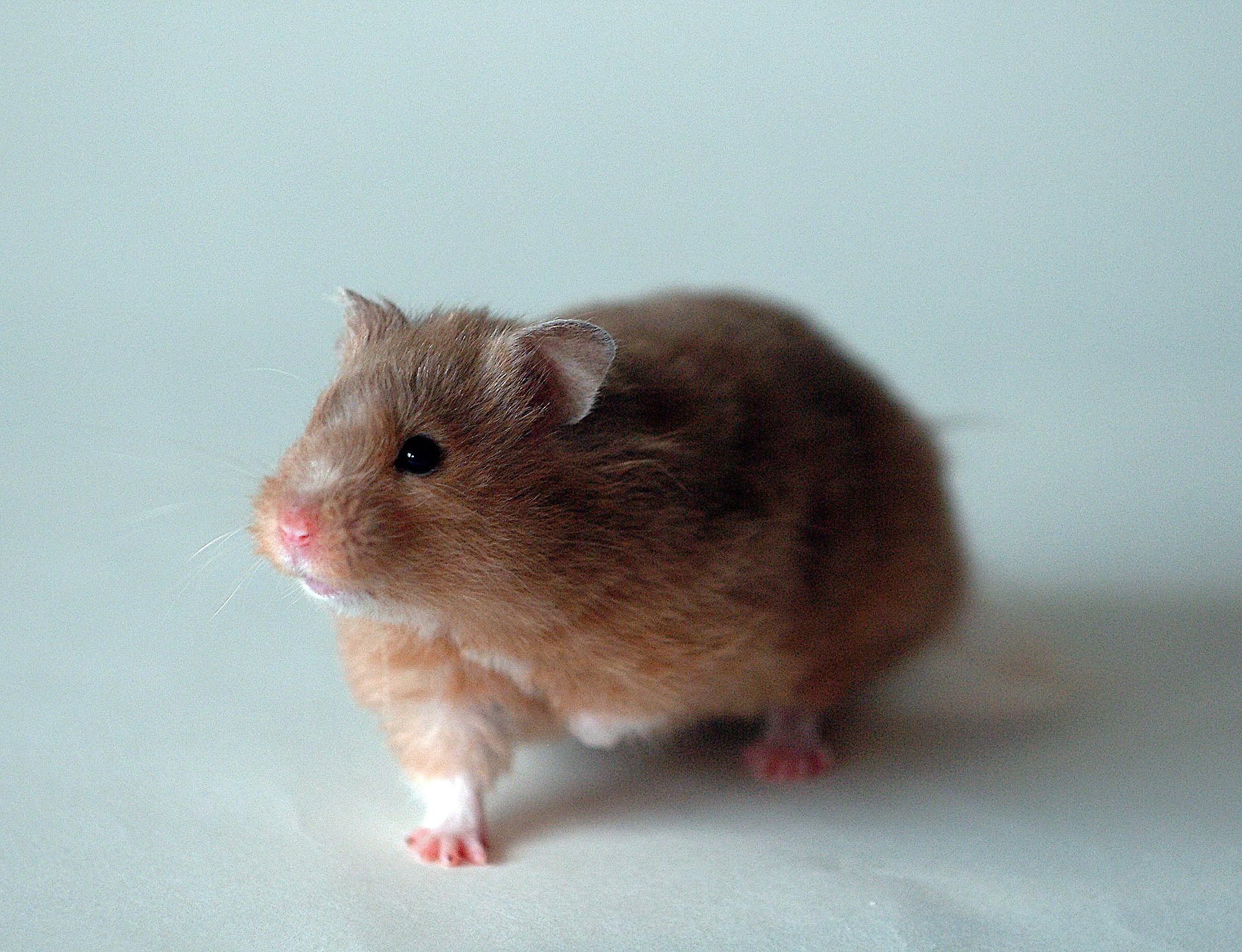
Mesocricetus auratus Facts
The golden hamster or Syrian hamster (Mesocricetus auratus) is a rodent belonging to the hamster subfamily, Cricetinae. Their natural geographical range is in an arid region of northern Syria and southern Turkey.
- Diet
- Under typical laboratory conditions, Syrian hamsters apparently do not exhibit food-anticipatory activity (FAA) – that is, when on a restricted feeding schedule where food is given at specific times of day, they do not demonstrate increased wheel-running prior to feeding time.
- Lifespan
- Up to 3.9 years (maximum recorded longevity)
Classification
Family: Cricetidae. Order: Rodentia.
What Do Mesocricetus auratuses Eat?
Diet classification: Herbivore. Recorded foods: Under typical laboratory conditions, Syrian hamsters apparently do not exhibit food-anticipatory activity (FAA) – that is, when on a restricted feeding schedule where food is given at specific times of day, they do not demonstrate increased wheel-running prior to feeding time.
Mesocricetus auratus Conservation Status
Mesocricetus auratus is listed here as Endangered. Protecting habitat, maintaining healthy prey or food sources, and reducing human pressure are important parts of conserving wild populations.
Quick facts
- Diet
- Herbivore
- Lifespan
- Up to 3.9 years (maximum recorded longevity)
- Weight
- 105 g
Fun facts
- A solitary species, Syrian hamsters are very territorial and intolerant of each other; attacks against each other are commonplace.
- In captivity, they may kill and eat healthy young as a result of the pups interacting with humans, as any foreign scent is treated as a threat.
- Infanticide is not uncommon among female golden hamsters.
Explore related categories
Discover more with the random animal generator or browse all animal profiles.
Similar animals
Explore nearby branches of the animal world.
Ready for another discovery?
The animal kingdom is full of surprises.
Sources and image credit
Animal facts are reviewed against the references below. The photograph remains available under the stated license.