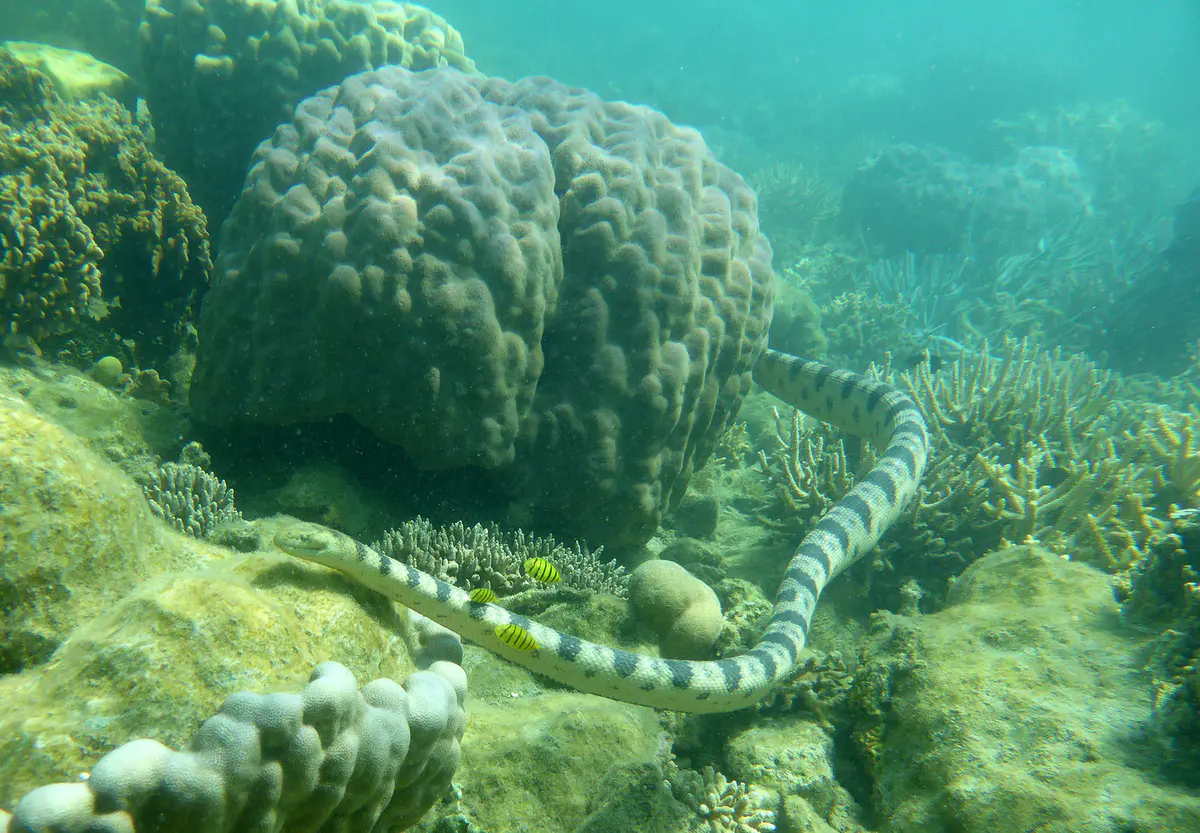
Olive-headed Sea Snake Facts Hydrophis major
The olive-headed sea snake, also known as the greater sea snake, is a fully aquatic venomous elapid of northern Australian, southern New Guinean and New Caledonian coastal waters.
- Habitat
- Marine
- Diet
- Recent New Caledonian studies found striped eel catfish (Plotosus lineatus) as the recorded prey
Classification
Family: Elapidae. Order: Squamata.
Olive-headed Sea Snake Habitat
Olive-headed Sea Snakes live in Marine and Coastal and Coral Reef habitats. Their recorded range includes Coastal waters from Western Australia and southern Papua New Guinea to New Caledonia. Suitable food, shelter, and conditions for raising young help shape that range.
What Do Olive-headed Sea Snakes Eat?
Diet classification: Carnivore. Recorded foods: Recent New Caledonian studies found striped eel catfish (Plotosus lineatus) as the recorded prey.
Olive-headed Sea Snake Conservation Status
Olive-headed Sea Snake is listed here as Least Concern. Protecting habitat, maintaining healthy prey or food sources, and reducing human pressure are important parts of conserving wild populations.
Quick facts
- Region
- Coastal waters from Western Australia and southern Papua New Guinea to New Caledonia
- Habitat
- Marine, Coastal, Coral Reef
- Diet
- Carnivore
- Size
- Can exceed 1.5 m in length
Fun facts
- Experiments show that greater sea snakes become more active when they detect waterborne chemical cues from striped eel catfish.
- Tracked snakes moved most during rapidly falling tides, when prey scent may be carried out of reef crevices.
- The species is fully aquatic and can forage from shallow coastal water into deeper marine habitat.
Explore related categories
Discover more with the random animal generator or browse all animal profiles.
Similar animals
Explore nearby branches of the animal world.
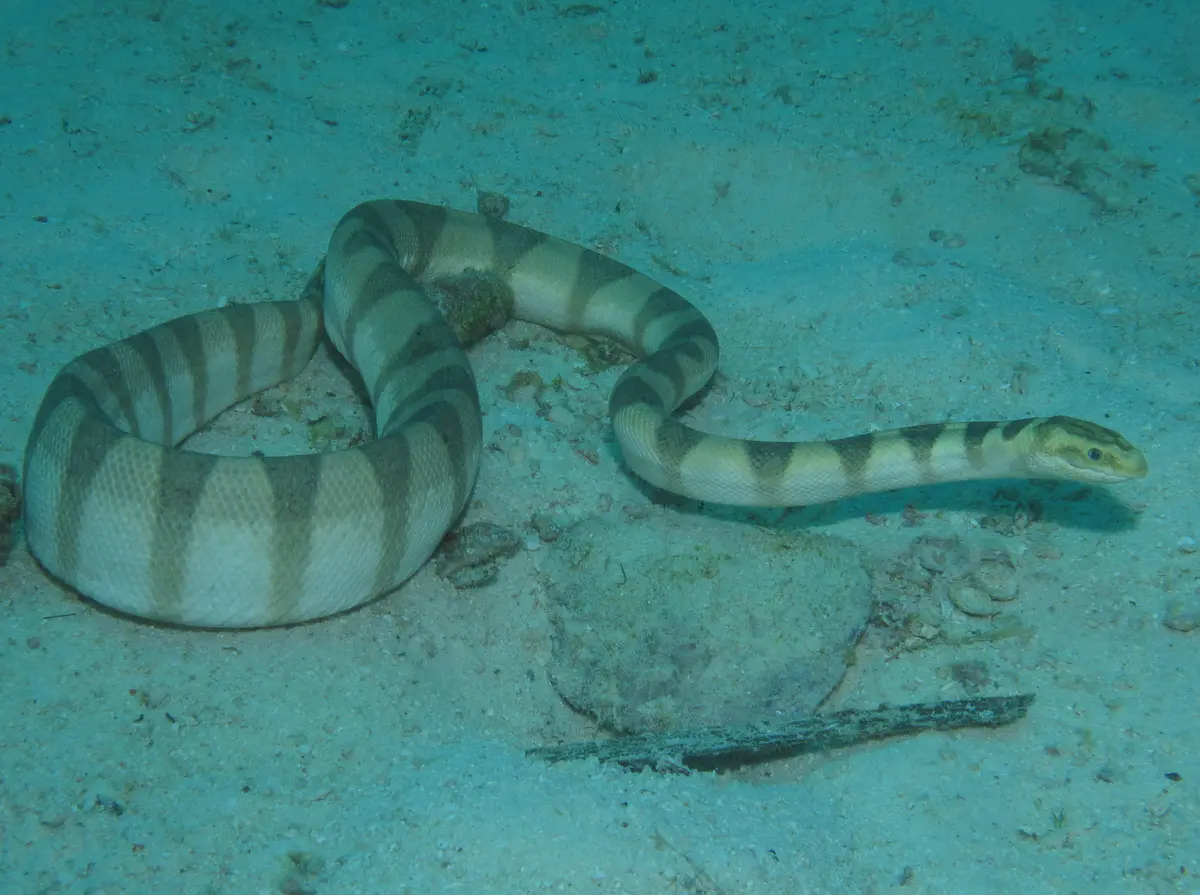 Lambert's Sea SnakeReptile · Coastal waters of Thailand, Vietnam and the Philippines
 Ornate Reef SeasnakeReptile · Indian Ocean and western Pacific from South and Southeast Asia to Australia, New Guinea, Japan and New Caledonia
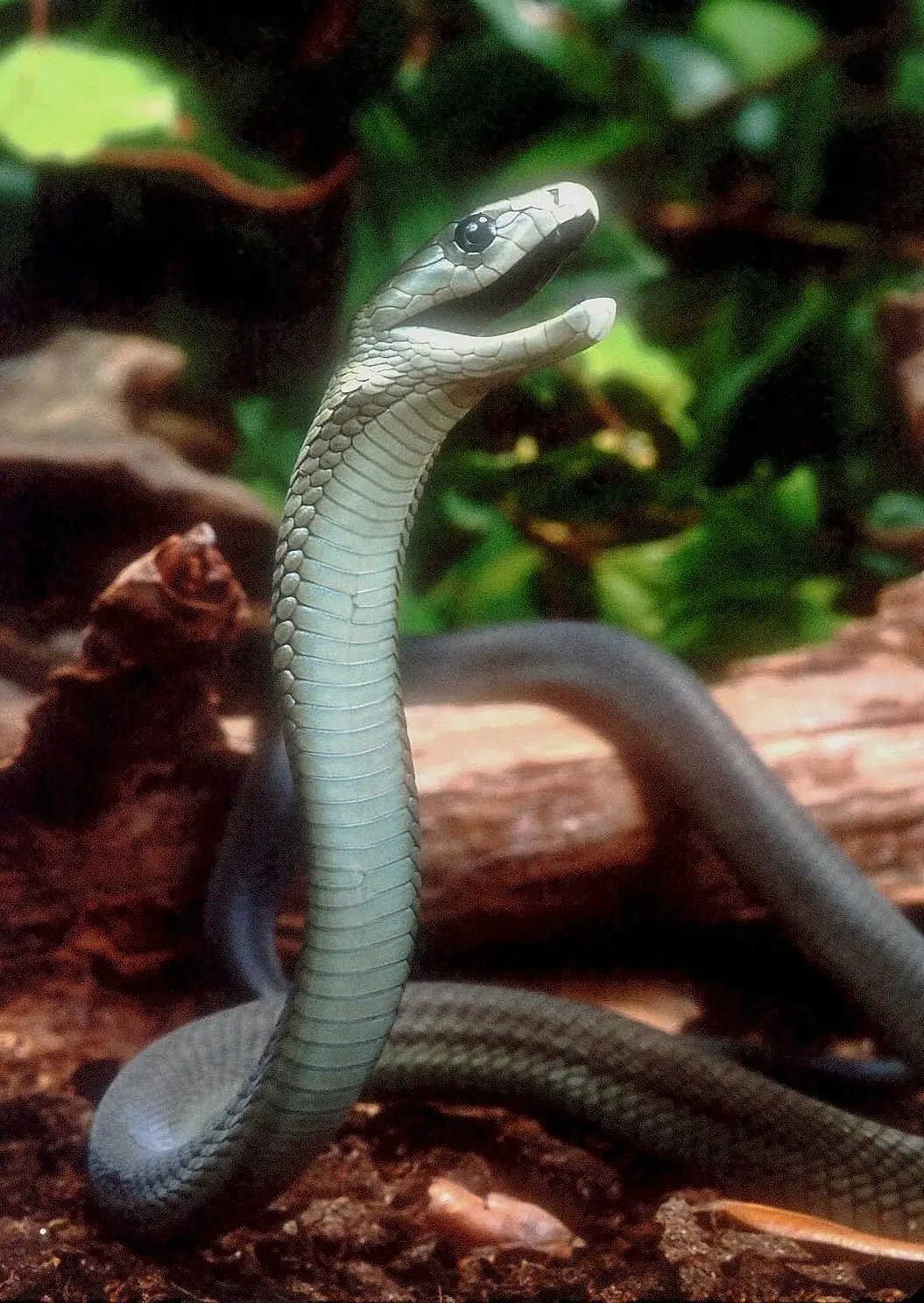 Black mambaReptile · Sub-Saharan Africa.
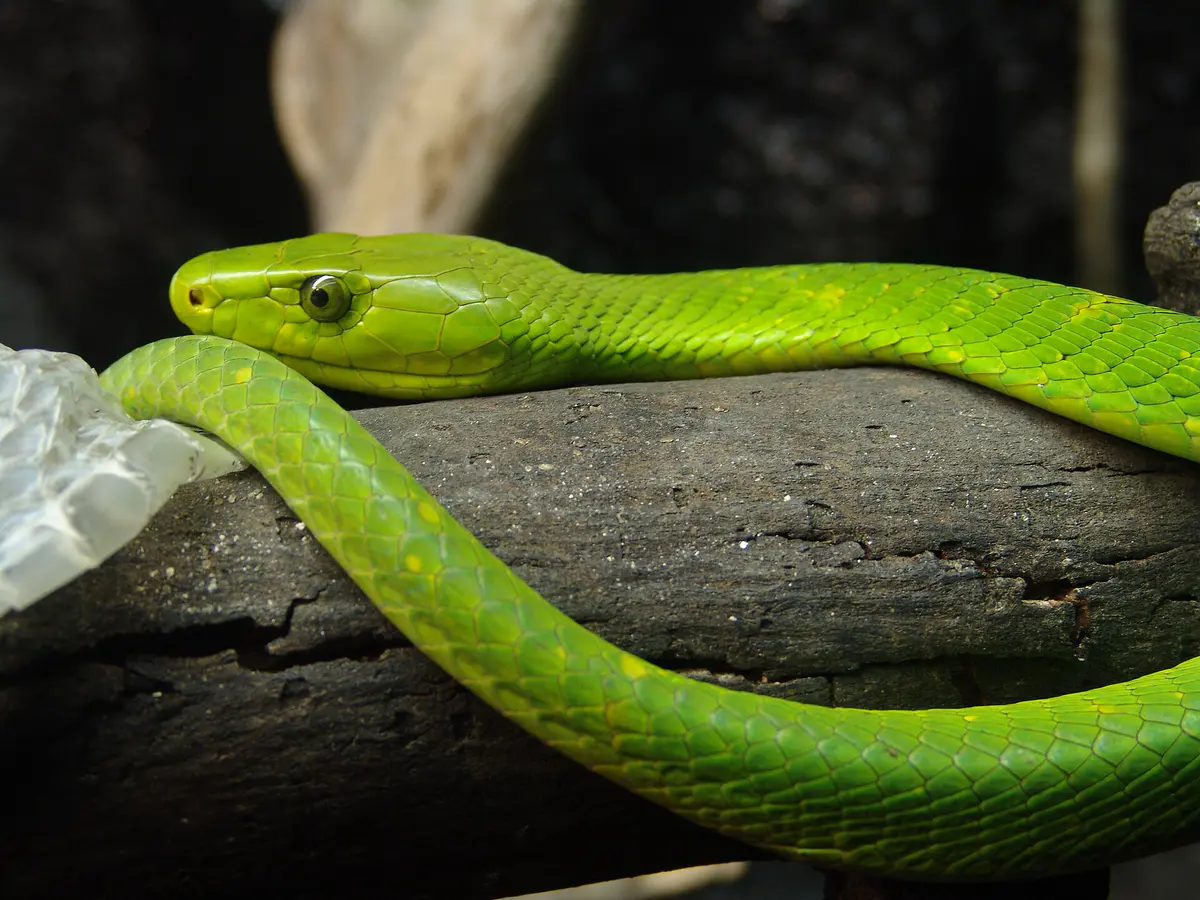 Eastern Green MambaReptile · Kenya, Tanzania, Malawi, Mozambique, Zimbabwe and coastal South Africa
Ready for another discovery?
The animal kingdom is full of surprises.
Sources and image credit
Animal facts are reviewed against the references below. The photograph remains available under the stated license.