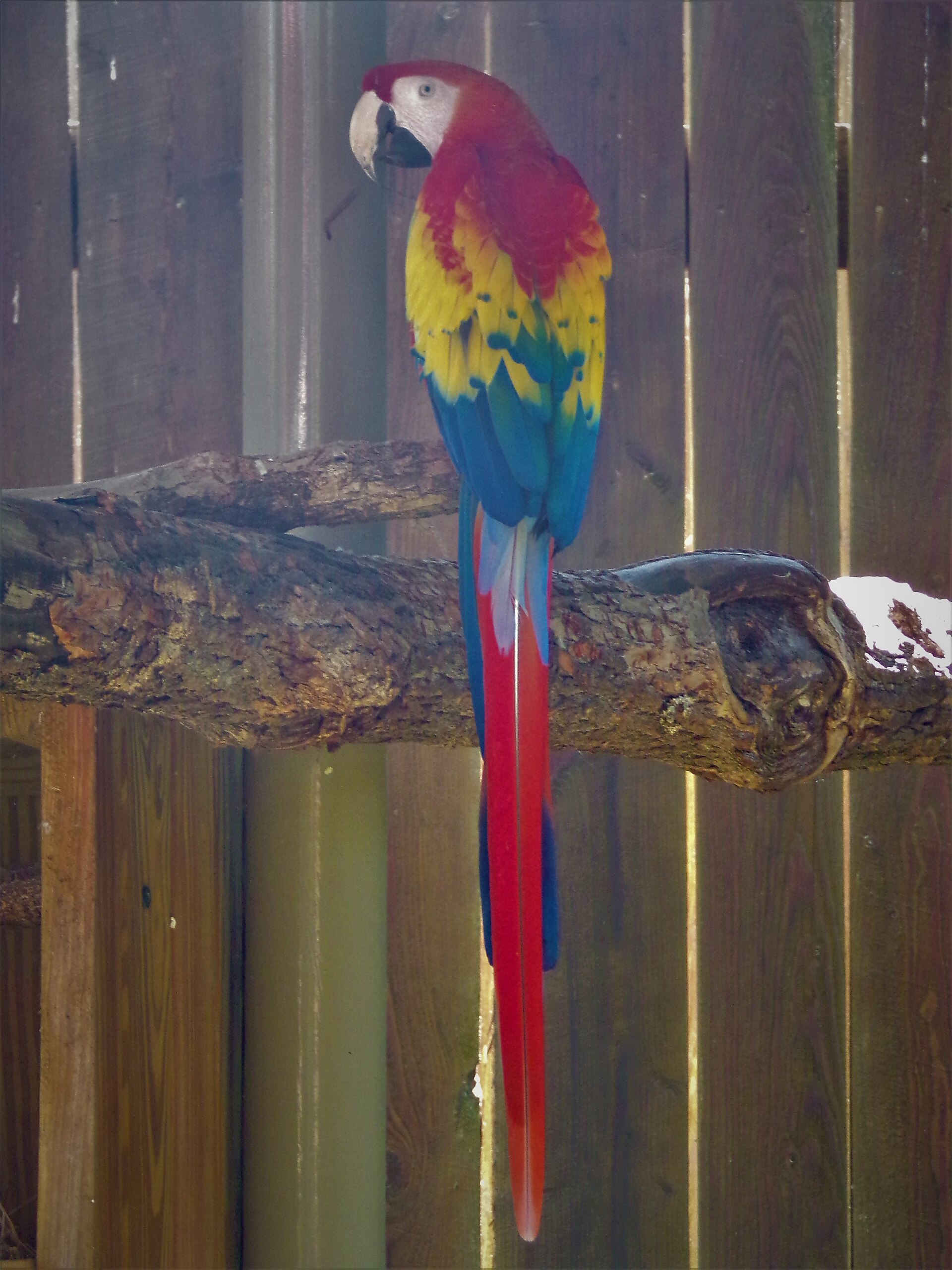
Scarlet Macaw Facts Ara macao
Scarlet macaws are large red, yellow, and blue parrots of tropical forests in the Americas. Strong beaks open hard nuts while long tails and pointed wings support swift flight above the canopy.
- Habitat
- Tropical Forest
- Diet
- Fruit, nuts, seeds, nectar, and flowers
- Lifespan
- 40–50 years
Classification
Family: Psittacidae. Order: Psittaciformes.
Scarlet Macaw Habitat
Scarlet Macaws live in Tropical Forest and Wetland habitats. Their recorded range includes Central and South America. Suitable food, shelter, and conditions for raising young help shape that range.
What Do Scarlet Macaws Eat?
Diet classification: Herbivore. Recorded foods: Fruit, nuts, seeds, nectar, and flowers.
Scarlet Macaw Lifespan, Size, and Weight
Recorded lifespan: 40–50 years. Recorded size: 81–96 cm. Recorded weight: 0.9–1.5 kg.
Scarlet Macaw Conservation Status
Scarlet Macaw is listed here as Least Concern. Protecting habitat, maintaining healthy prey or food sources, and reducing human pressure are important parts of conserving wild populations.
Quick facts
- Region
- Central and South America
- Habitat
- Tropical Forest, Wetland
- Diet
- Herbivore
- Lifespan
- 40–50 years
- Size
- 81–96 cm
- Weight
- 0.9–1.5 kg
Fun facts
- Pairs often remain together for years and fly close beside one another.
- Their powerful beaks can crack hard-shelled nuts and also serve as a climbing aid.
- Bare facial skin carries tiny feather lines whose patterns vary among individuals.
- Loud calls help flock members stay in contact across dense forest.
Explore related categories
Discover more with the random animal generator or browse all animal profiles.
Similar animals
Explore nearby branches of the animal world.
Ready for another discovery?
The animal kingdom is full of surprises.
Sources and image credit
Animal facts are reviewed against the references below. The photograph remains available under the stated license.