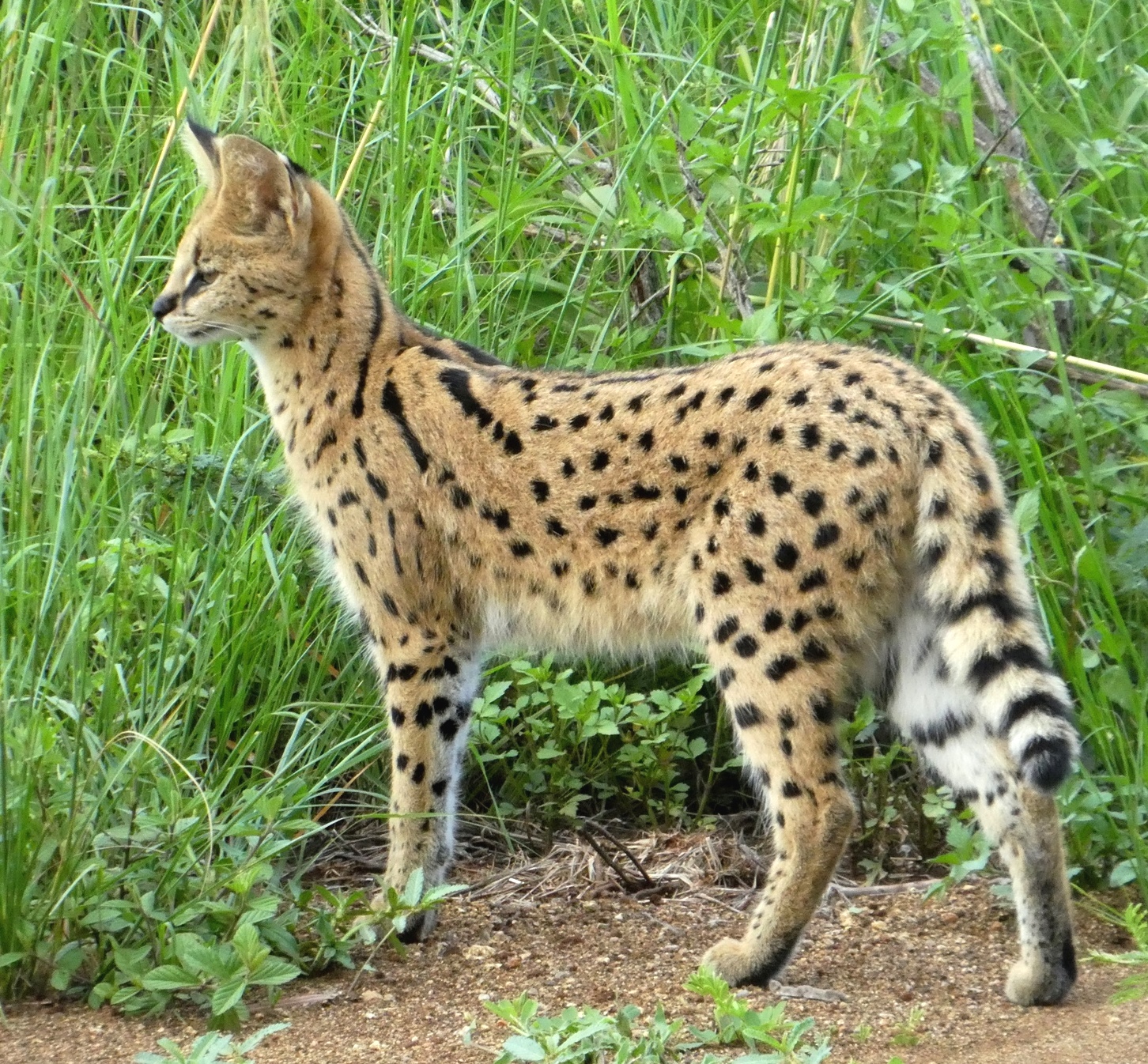
serval Facts Leptailurus serval
The serval (Leptailurus serval) is a wild small cat native to Africa. It is widespread in sub-Saharan countries, where it inhabits grasslands, wetlands, moorlands and bamboo thickets.
- Diet
- The serval is a carnivore that preys on rodents, particularly vlei rats, shrews, small birds, hares, frogs, insects, and reptiles, and also feeds on grass that can facilitate digestion or act as an emetic.
- Lifespan
- Up to 22.4 years (maximum recorded longevity)
Classification
Family: Felidae. Order: Carnivora.
What Do servals Eat?
Diet classification: Carnivore. Recorded foods: the serval is a carnivore that preys on rodents, particularly vlei rats, shrews, small birds, hares, frogs, insects, and reptiles, and also feeds on grass that can facilitate digestion or act as an emetic.
serval Conservation Status
serval is listed here as Least Concern. Protecting habitat, maintaining healthy prey or food sources, and reducing human pressure are important parts of conserving wild populations.
Quick facts
- Diet
- Carnivore
- Lifespan
- Up to 22.4 years (maximum recorded longevity)
- Weight
- 12 kg
Fun facts
- During the hot midday, they rest or groom themselves in the shade of bushes and grasses.
- Servals might be active for a longer time on cool or rainy days.
- The serval is active both in the day and at night; activity might peak in early morning, around twilight, and at midnight.
Explore related categories
Discover more with the random animal generator or browse all animal profiles.
Similar animals
Explore nearby branches of the animal world.
Ready for another discovery?
The animal kingdom is full of surprises.
Sources and image credit
Animal facts are reviewed against the references below. The photograph remains available under the stated license.