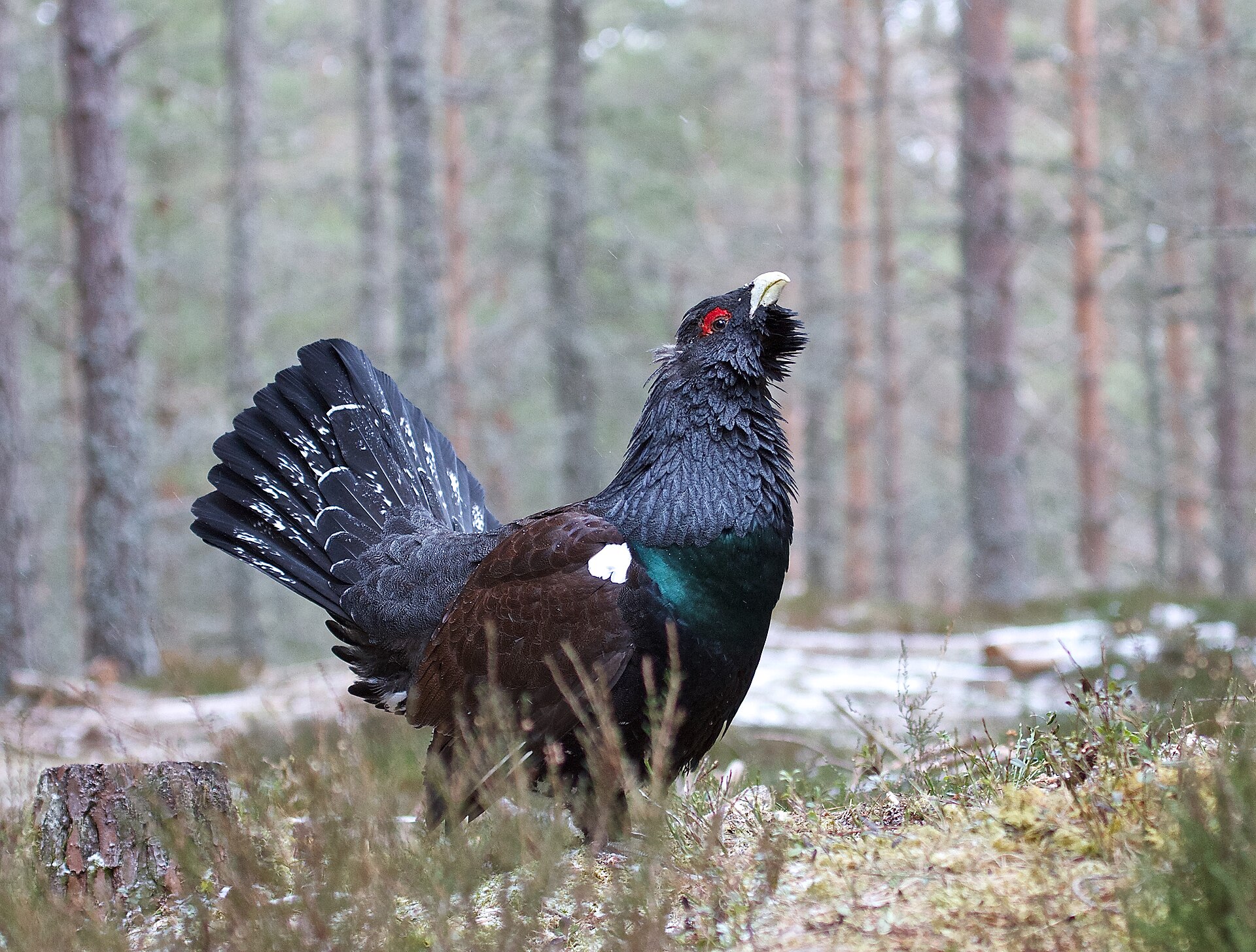
Bird
Western Capercaillie Facts Tetrao urogallus
- Diet
- They mainly feed on Vaccinium species, especially bilberry, find cover in young tree growth, and use the open spaces when flying.
- Lifespan
- Up to 18 years (maximum recorded longevity)
Classification
Family: Phasianidae. Order: Galliformes.
What Do Western Capercaillies Eat?
Diet classification: Herbivore. Recorded foods: They mainly feed on Vaccinium species, especially bilberry, find cover in young tree growth, and use the open spaces when flying.
Western Capercaillie Conservation Status
Western Capercaillie is listed here as Least Concern. Protecting habitat, maintaining healthy prey or food sources, and reducing human pressure are important parts of conserving wild populations.
Quick facts
- Diet
- Herbivore
- Lifespan
- Up to 18 years (maximum recorded longevity)
- Weight
- 2.72 kg
Fun facts
- As habitat specialists, they hardly use any other forest types.
- The western capercaillie is adapted to its original habitats—old coniferous forests with a rich interior structure and dense ground vegetation of Vaccinium species under a light canopy.
- Western capercaillies are not elegant fliers due to their body weight and short, rounded wings.
Explore related categories
Discover more with the random animal generator or browse all animal profiles.
Similar animals
Explore nearby branches of the animal world.
Ready for another discovery?
The animal kingdom is full of surprises.
Sources and image credit
Animal facts are reviewed against the references below. The photograph remains available under the stated license.