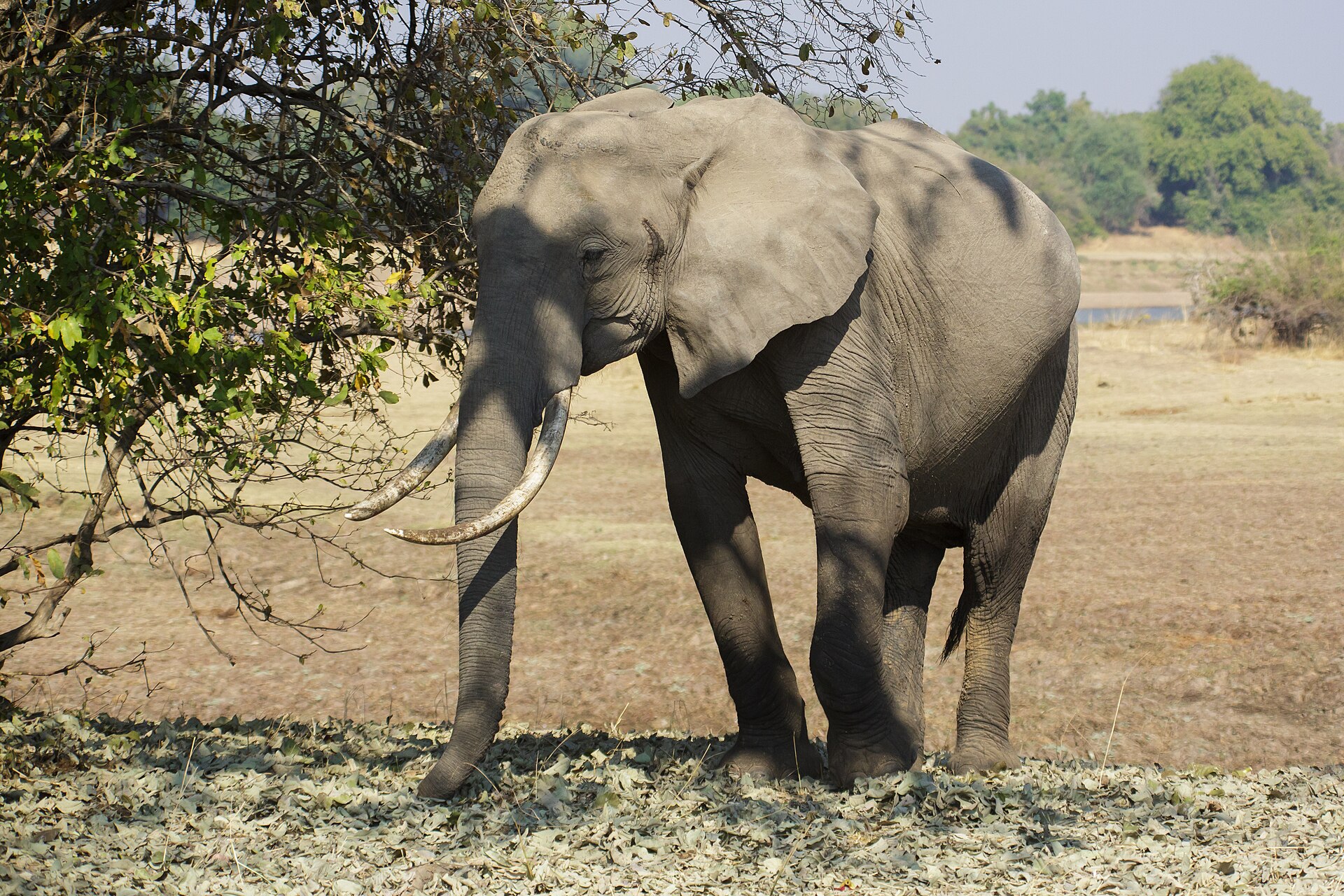
African Bush Elephant Facts Loxodonta africana
African bush elephants are the largest living land animals and range across savannas, woodlands, and forests. Their feeding, digging, and tree-felling reshape habitats used by many other species.
- Habitat
- Savanna
- Diet
- Grasses, leaves, bark, roots, and fruit
- Lifespan
- 60–70 years
Classification
Family: Elephantidae. Order: Proboscidea.
African Bush Elephant Habitat
African Bush Elephants live in Savanna and Grassland and Forest habitats. Their recorded range includes Sub-Saharan Africa. Suitable food, shelter, and conditions for raising young help shape that range.
What Do African Bush Elephants Eat?
Diet classification: Herbivore. Recorded foods: Grasses, leaves, bark, roots, and fruit.
African Bush Elephant Lifespan, Size, and Weight
Recorded lifespan: 60–70 years. Recorded size: 220–400 cm at the shoulder. Recorded weight: 2,000–6,100 kg.
African Bush Elephant Conservation Status
African Bush Elephant is listed here as Endangered. Protecting habitat, maintaining healthy prey or food sources, and reducing human pressure are important parts of conserving wild populations.
Quick facts
- Region
- Sub-Saharan Africa
- Habitat
- Savanna, Grassland, Forest
- Diet
- Herbivore
- Lifespan
- 60–70 years
- Size
- 220–400 cm at the shoulder
- Weight
- 2,000–6,100 kg
Fun facts
- Their trunks contain tens of thousands of muscles and can handle both heavy branches and tiny objects.
- Low-frequency rumbles can travel through air and ground over long distances.
- Family herds are usually led by an experienced matriarch.
- Large ears release heat and help elephants regulate body temperature.
Explore related categories
Discover more with the random animal generator or browse all animal profiles.
Similar animals
Explore nearby branches of the animal world.
Ready for another discovery?
The animal kingdom is full of surprises.
Sources and image credit
Animal facts are reviewed against the references below. The photograph remains available under the stated license.