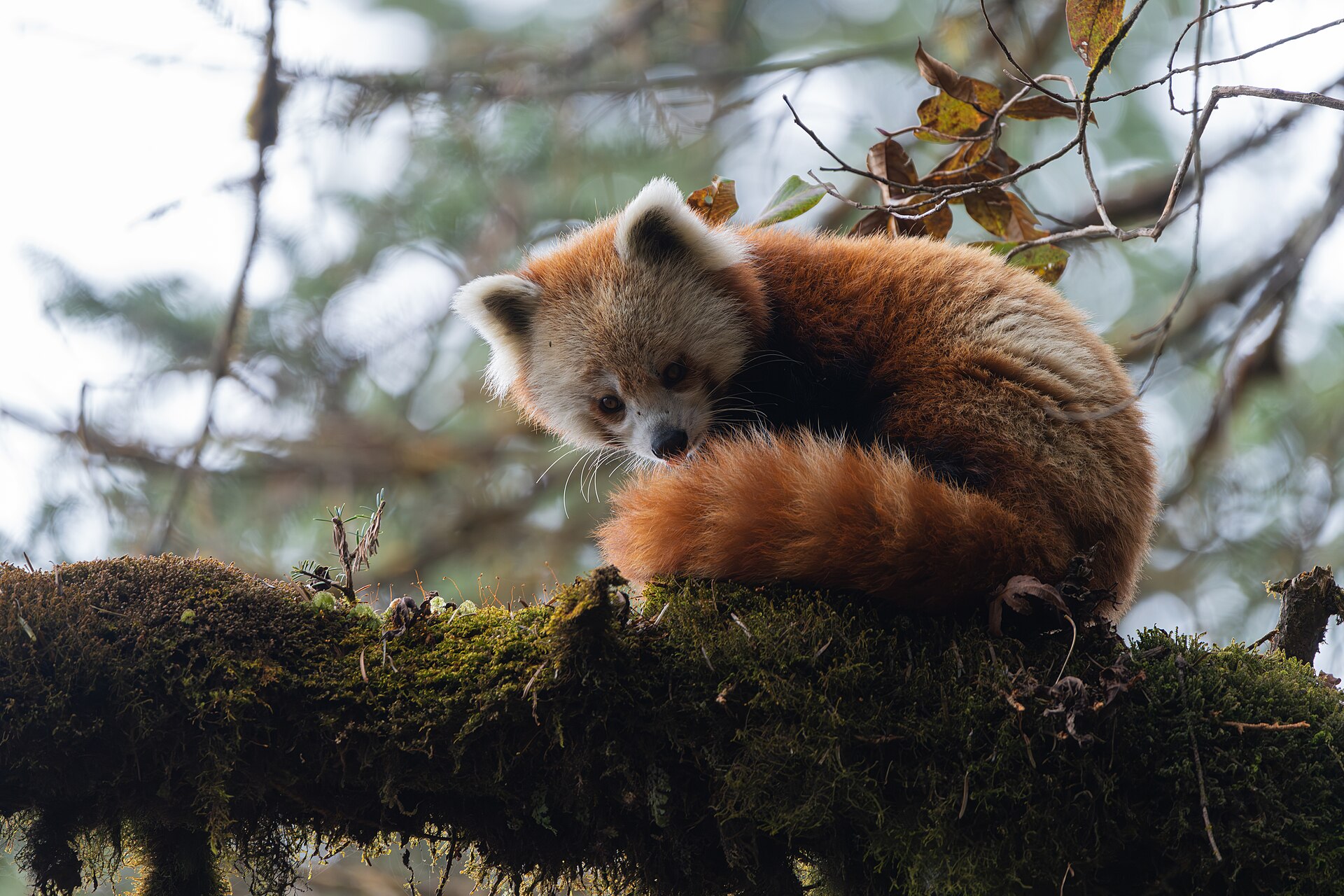
Red Panda Facts Ailurus fulgens
Red pandas are small, tree-dwelling mammals native to the eastern Himalayas. Their flexible ankles and sharp claws make them agile climbers in steep temperate forests.
- Habitat
- Temperate Forest
- Diet
- Bamboo, fruit, eggs, and insects
- Lifespan
- 8–10 years
Classification
Family: Ailuridae. Order: Carnivora.
Red Panda Habitat
Red Pandas live in Temperate Forest and Mountain habitats. Their recorded range includes Eastern Himalayas. Suitable food, shelter, and conditions for raising young help shape that range.
What Do Red Pandas Eat?
Diet classification: Omnivore. Recorded foods: Bamboo, fruit, eggs, and insects.
Red Panda Lifespan, Size, and Weight
Recorded lifespan: 8–10 years. Recorded size: 50–64 cm. Recorded weight: 3.7–6.2 kg.
Red Panda Conservation Status
Red Panda is listed here as Endangered. Protecting habitat, maintaining healthy prey or food sources, and reducing human pressure are important parts of conserving wild populations.
Quick facts
- Region
- Eastern Himalayas
- Habitat
- Temperate Forest, Mountain
- Diet
- Omnivore
- Lifespan
- 8–10 years
- Size
- 50–64 cm
- Weight
- 3.7–6.2 kg
Fun facts
- Red pandas can rotate their ankles to climb down trees headfirst.
- Their long, ringed tails help with balance and provide warmth while resting.
- A wrist-bone extension works like a false thumb for gripping bamboo.
- They are the only living members of the family Ailuridae.
Explore related categories
Discover more with the random animal generator or browse all animal profiles.
Similar animals
Explore nearby branches of the animal world.
Ready for another discovery?
The animal kingdom is full of surprises.
Sources and image credit
Animal facts are reviewed against the references below. The photograph remains available under the stated license.