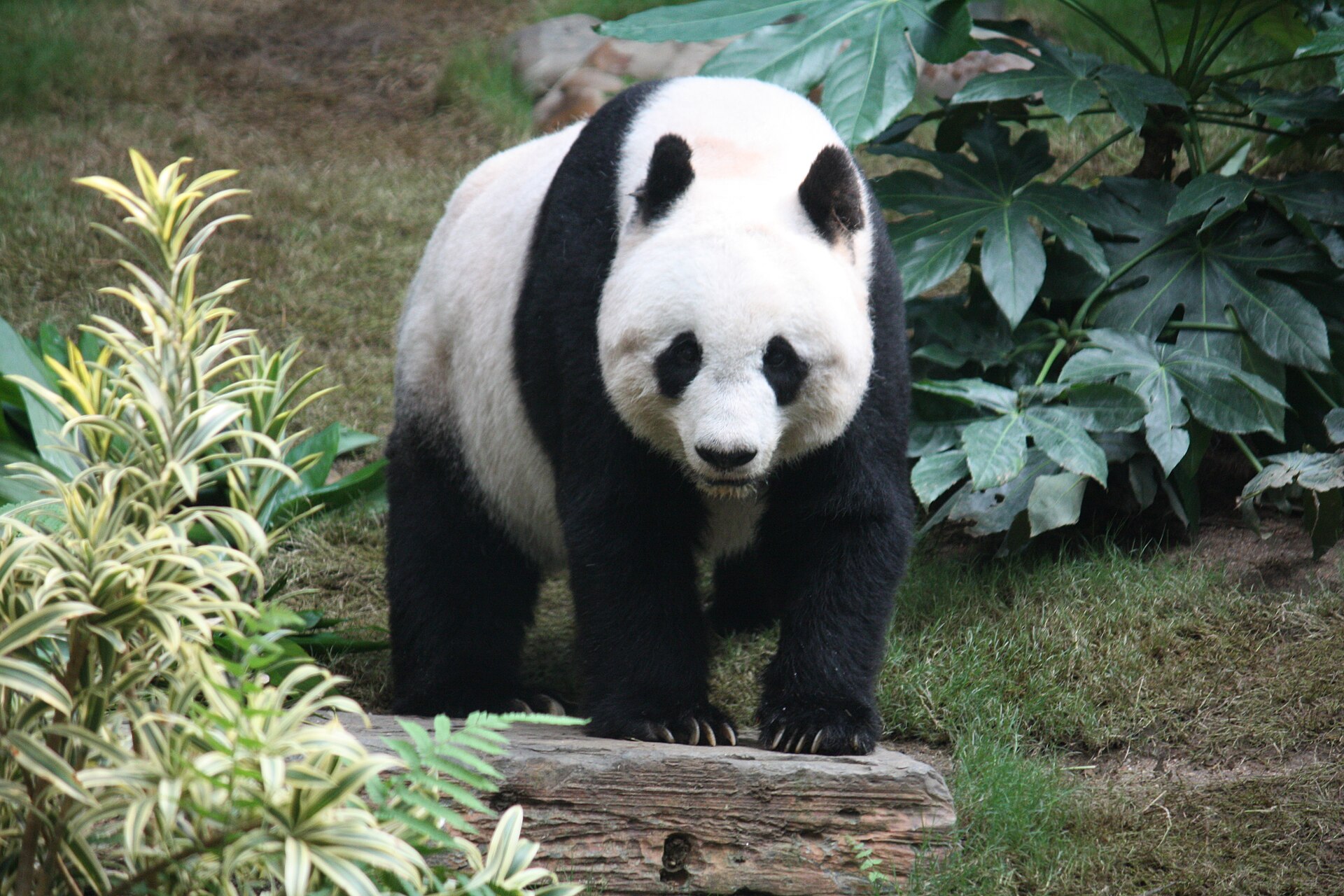
Giant Panda Facts Ailuropoda melanoleuca
Giant pandas are mountain-dwelling bears from central China whose diet is dominated by bamboo. Strong jaws, broad molars, and a false thumb help them process tough stems and leaves.
- Habitat
- Temperate Forest
- Diet
- Primarily bamboo
- Lifespan
- 15–20 years
Classification
Family: Ursidae. Order: Carnivora.
Giant Panda Habitat
Giant Pandas live in Temperate Forest and Mountain habitats. Their recorded range includes Central China. Suitable food, shelter, and conditions for raising young help shape that range.
What Do Giant Pandas Eat?
Diet classification: Herbivore. Recorded foods: Primarily bamboo.
Giant Panda Lifespan, Size, and Weight
Recorded lifespan: 15–20 years. Recorded size: 120–190 cm. Recorded weight: 70–125 kg.
Giant Panda Conservation Status
Giant Panda is listed here as Vulnerable. Protecting habitat, maintaining healthy prey or food sources, and reducing human pressure are important parts of conserving wild populations.
Quick facts
- Region
- Central China
- Habitat
- Temperate Forest, Mountain
- Diet
- Herbivore
- Lifespan
- 15–20 years
- Size
- 120–190 cm
- Weight
- 70–125 kg
Fun facts
- A modified wrist bone acts like a thumb for holding bamboo.
- Pandas spend much of the day feeding because bamboo is low in energy.
- Cubs are tiny compared with their mothers at birth.
- Their black-and-white pattern may help with both camouflage and communication.
Explore related categories
Discover more with the random animal generator or browse all animal profiles.
Similar animals
Explore nearby branches of the animal world.
Ready for another discovery?
The animal kingdom is full of surprises.
Sources and image credit
Animal facts are reviewed against the references below. The photograph remains available under the stated license.