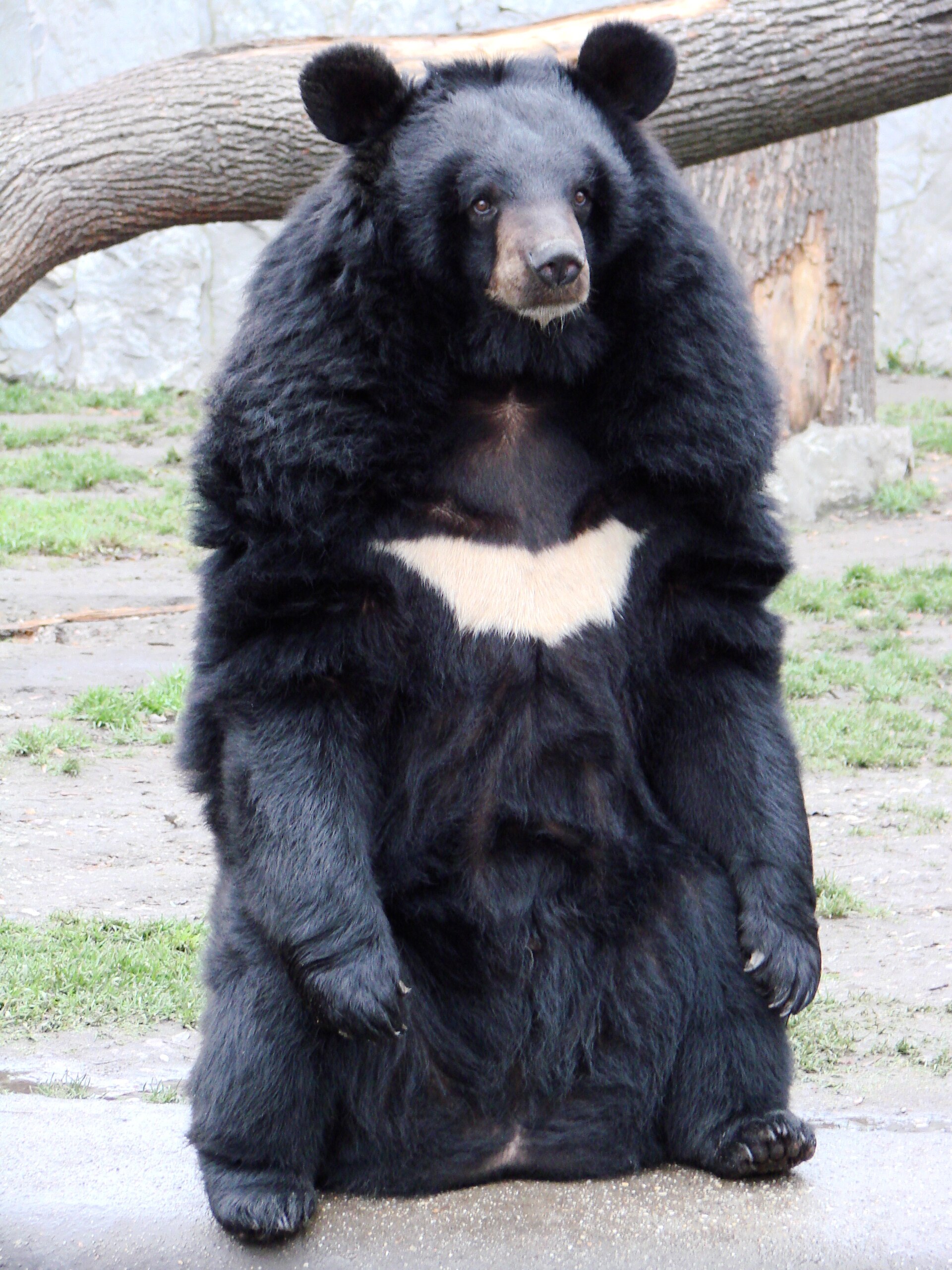
Ursus thibetanus Facts
The Asian black bear (Ursus thibetanus), also known as the Asiatic black bear, moon bear and white-chested bear, is a medium-sized bear species native to Asia that is largely adapted to an arboreal lifestyle. It is distributed from southeastern Iran, Pakistan, India and the Himalayas to mainland Southeast Asia, the Korean Peninsula, Taiwan, China and the Russian Far East to the islands of Honshū and Shikoku in Japan.
- Diet
- They are good climbers of rocks and trees, and will climb to feed, rest, sun, elude enemies and hibernate.
- Lifespan
- Up to 39.2 years (maximum recorded longevity)
Classification
Family: Ursidae. Order: Carnivora.
What Do Ursus thibetanuses Eat?
Diet classification: Herbivore. Recorded foods: They are good climbers of rocks and trees, and will climb to feed, rest, sun, elude enemies and hibernate.
Ursus thibetanus Conservation Status
Ursus thibetanus is listed here as Vulnerable. Protecting habitat, maintaining healthy prey or food sources, and reducing human pressure are important parts of conserving wild populations.
Quick facts
- Diet
- Herbivore
- Lifespan
- Up to 39.2 years (maximum recorded longevity)
- Weight
- 77.5 kg
Fun facts
- Asian black bears are diurnal, though they become nocturnal near human habitations.
- Asian black bears will rest for short periods in nests on trees standing fifteen feet or higher.
- Some older bears may become too heavy to climb.
Explore related categories
Discover more with the random animal generator or browse all animal profiles.
Similar animals
Explore nearby branches of the animal world.
Ready for another discovery?
The animal kingdom is full of surprises.
Sources and image credit
Animal facts are reviewed against the references below. The photograph remains available under the stated license.