Pallas's Cat Facts Otocolobus manul
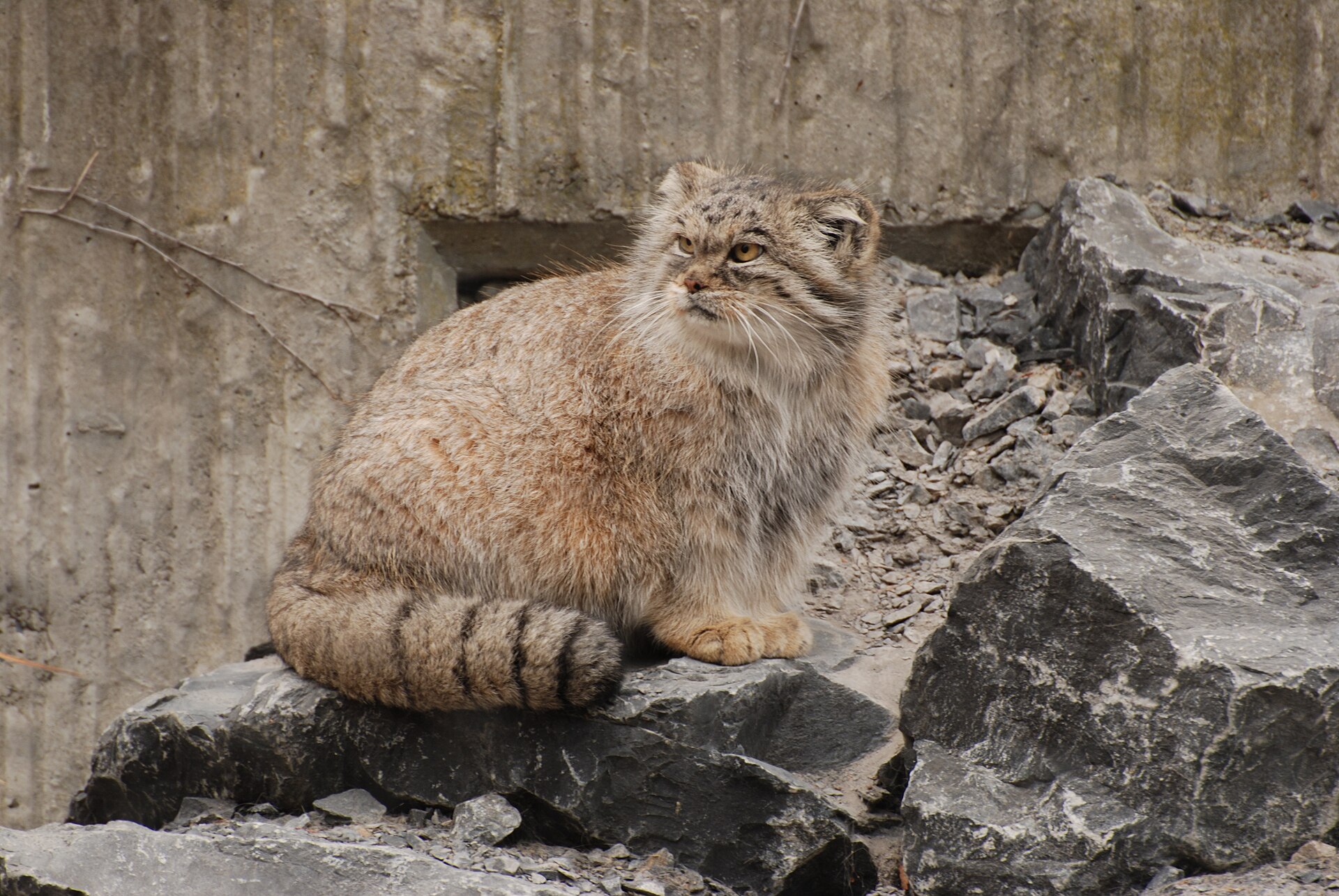
Pallas's cats are small, stocky wild cats of Central Asia's cold steppes and rocky uplands. Dense fur, low-set ears, and a flattened body profile help them stay insulated and concealed among rocks.
- Habitat
- Mountain
- Diet
- Pikas, voles, gerbils, hamsters, small birds, and lizards
- Lifespan
- 8–9 years
Classification
Family: Felidae. Order: Carnivora.
Pallas's Cat Habitat
Pallas's Cats live in Mountain and Grassland and Scrub and Desert habitats. Their recorded range includes Central Asia. Suitable food, shelter, and conditions for raising young help shape that range.
What Do Pallas's Cats Eat?
Diet classification: Carnivore. Recorded foods: Pikas, voles, gerbils, hamsters, small birds, and lizards.
Pallas's Cat Lifespan, Size, and Weight
Recorded lifespan: 8–9 years. Recorded size: 51–61 cm, plus a 20–25 cm tail. Recorded weight: 1.8–5 kg.
Pallas's Cat Conservation Status
Pallas's Cat is listed here as Least Concern. Protecting habitat, maintaining healthy prey or food sources, and reducing human pressure are important parts of conserving wild populations.
Quick facts
- Region
- Central Asia
- Habitat
- Mountain, Grassland, Scrub, Desert
- Diet
- Carnivore
- Lifespan
- 8–9 years
- Size
- 51–61 cm, plus a 20–25 cm tail
- Weight
- 1.8–5 kg
Fun facts
- Unlike most small cats, Pallas's cats have round pupils.
- They often ambush prey at the entrances of rodent burrows.
- Low-set ears let them peer over rocks without exposing much of the head.
- Their thick winter coat helps them tolerate severe mountain cold.
Explore related categories
Discover more with the random animal generator or browse all animal profiles.
Similar animals
Explore nearby branches of the animal world.
Ready for another discovery?
The animal kingdom is full of surprises.
Sources and image credit
Animal facts are reviewed against the references below. The photograph remains available under the stated license.