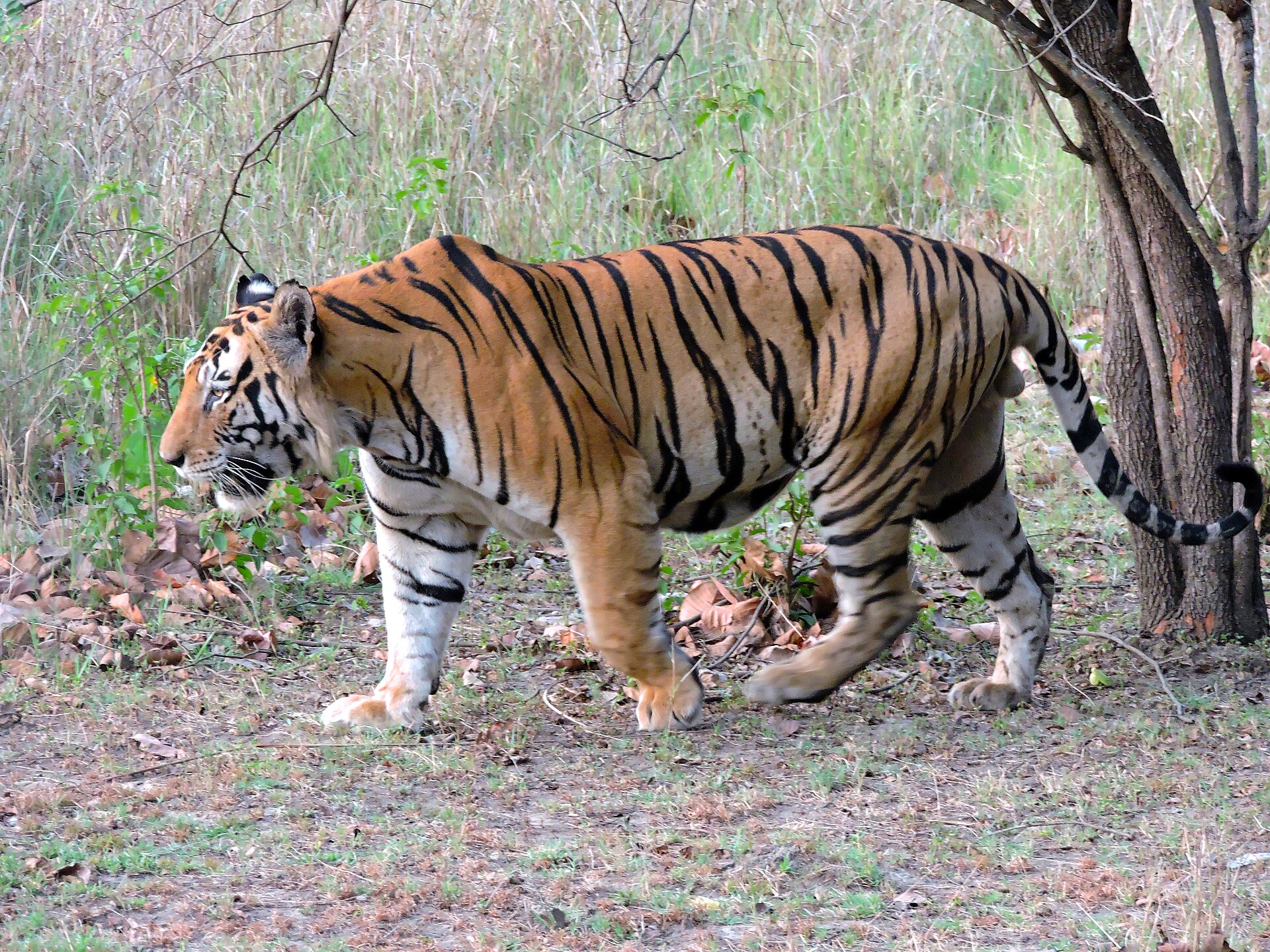
Tiger Facts Panthera tigris
Tigers are the largest living cats and range across forests, grasslands, wetlands, and mountain habitats in Asia. Each animal's stripe pattern is unique, providing camouflage as it stalks prey through vegetation.
- Habitat
- Forest
- Diet
- Deer, wild pigs, and other medium-to-large vertebrates
- Lifespan
- 8–10 years in the wild; typically 16–18 years in captivity
Classification
Family: Felidae. Order: Carnivora.
Tiger Habitat
Tigers live in Forest and Grassland and Wetland and Mountain habitats. Their recorded range includes Asia. Suitable food, shelter, and conditions for raising young help shape that range.
What Do Tigers Eat?
Diet classification: Carnivore. Recorded foods: Deer, wild pigs, and other medium-to-large vertebrates.
Tiger Lifespan, Size, and Weight
Recorded lifespan: 8–10 years in the wild; typically 16–18 years in captivity. Recorded size: 198–370 cm. Recorded weight: 91–423 kg.
Tiger Conservation Status
Tiger is listed here as Endangered. Protecting habitat, maintaining healthy prey or food sources, and reducing human pressure are important parts of conserving wild populations.
Quick facts
- Region
- Asia
- Habitat
- Forest, Grassland, Wetland, Mountain
- Diet
- Carnivore
- Lifespan
- 8–10 years in the wild; typically 16–18 years in captivity
- Size
- 198–370 cm
- Weight
- 91–423 kg
Fun facts
- No two tigers have exactly the same stripe pattern.
- Tigers are strong swimmers and can cross wide rivers.
- Most adults live and hunt alone outside breeding and cub-rearing periods.
- Their main prey includes deer and wild pigs.
Explore related categories
Discover more with the random animal generator or browse all animal profiles.
Similar animals
Explore nearby branches of the animal world.
Ready for another discovery?
The animal kingdom is full of surprises.
Sources and image credit
Animal facts are reviewed against the references below. The photograph remains available under the stated license.