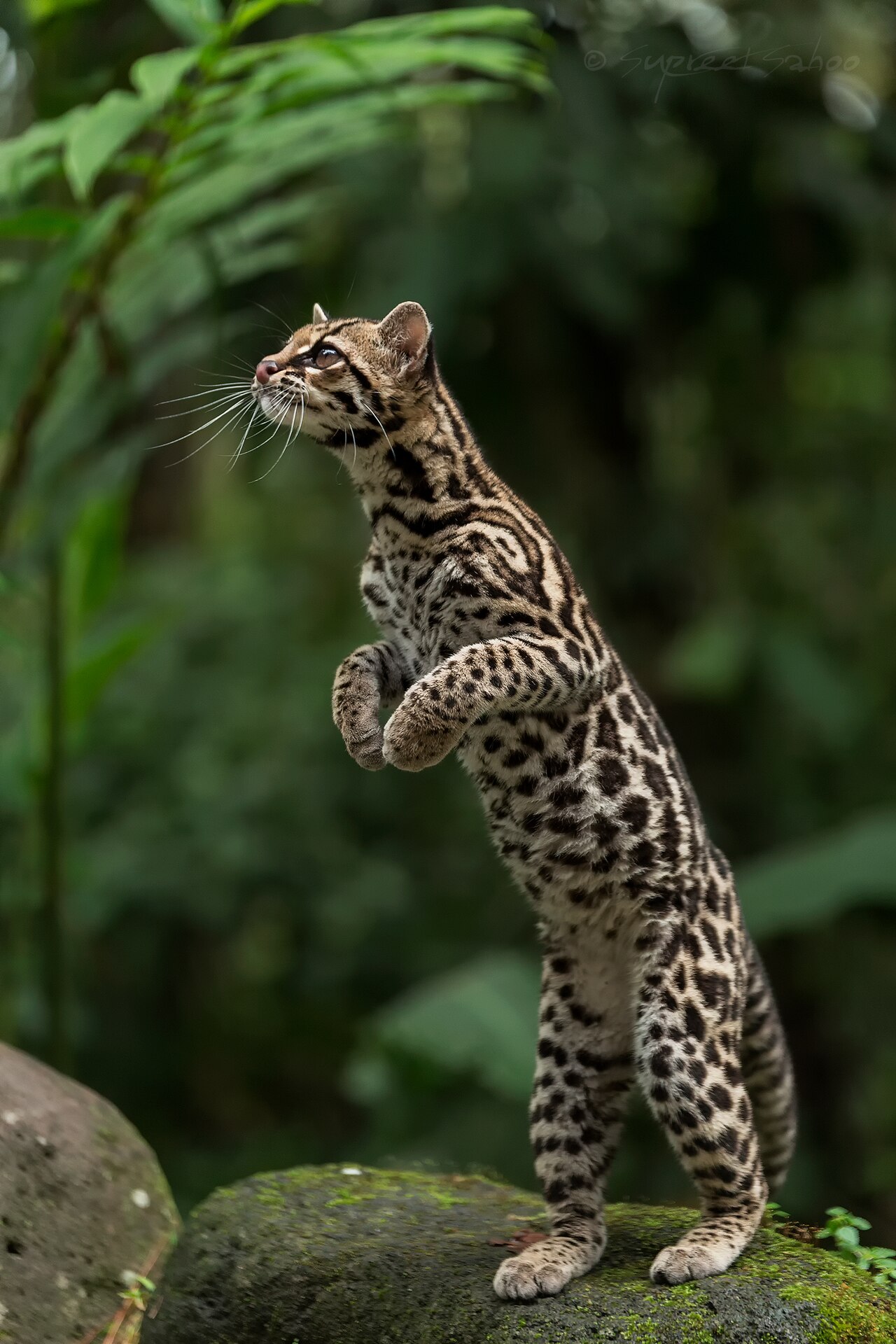
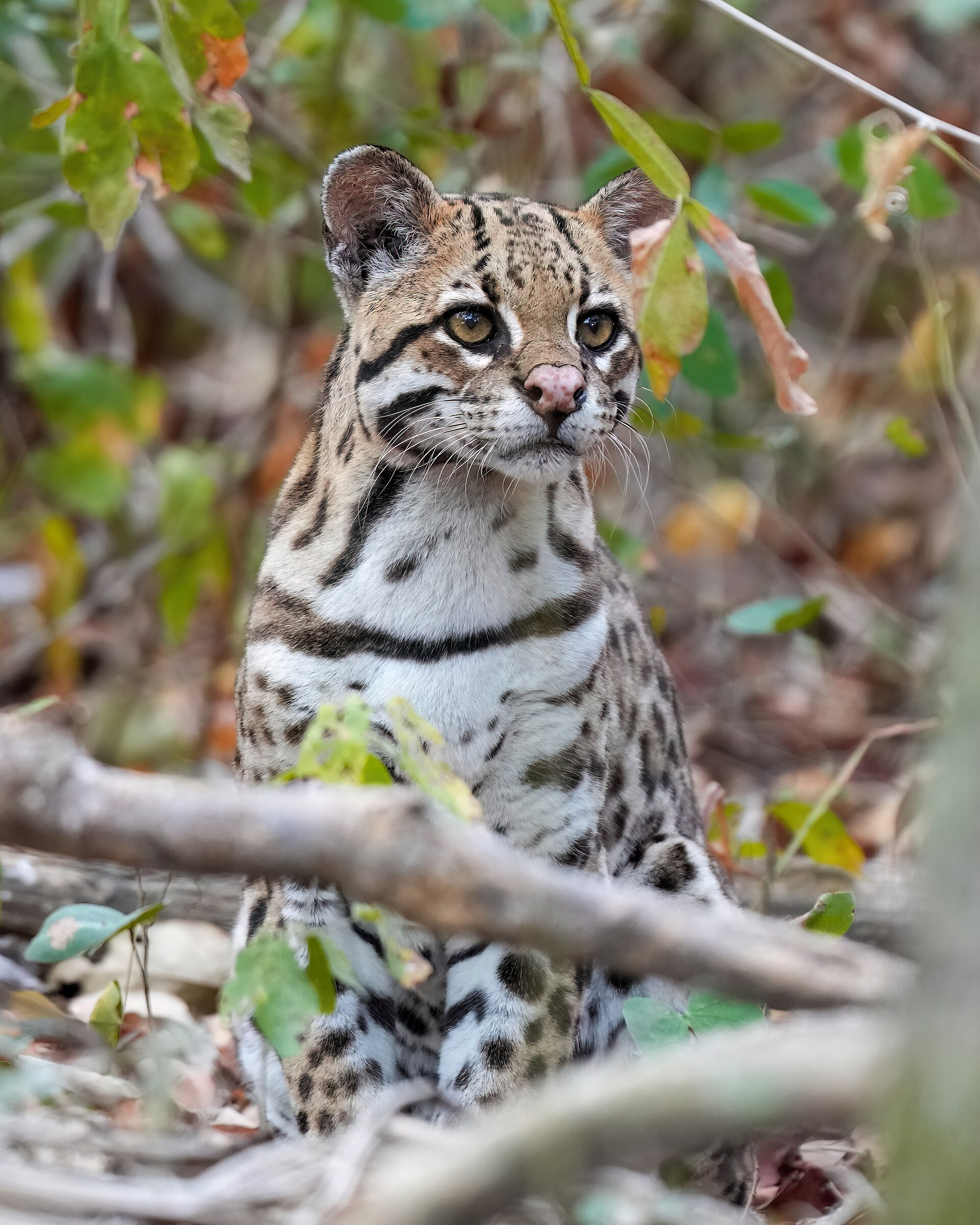
margay Facts Leopardus wiedii
The margay (Leopardus wiedii) is a small wild cat native to Mexico, Central and South America. A solitary and nocturnal felid, it lives mainly in primary evergreen and deciduous forest.
- Diet
- Dietary studies (based on stomach-content and fecal analyses) have shown that the margay feeds on small primates (such as marmosets, tamarins, squirrel and titi monkeys), numerous birds and lizards (and their eggs and young), small snakes, tree frogs and arthropods.
- Lifespan
- Up to 24 years (maximum recorded longevity)
Classification
Family: Felidae. Order: Carnivora.
What Do margays Eat?
Diet classification: Carnivore. Recorded foods: Dietary studies (based on stomach-content and fecal analyses) have shown that the margay feeds on small primates (such as marmosets, tamarins, squirrel and titi monkeys), numerous birds and lizards (and their eggs and young), small snakes, tree frogs and arthropods.
margay Conservation Status
margay is listed here as Near Threatened. Protecting habitat, maintaining healthy prey or food sources, and reducing human pressure are important parts of conserving wild populations.
Quick facts
- Diet
- Carnivore
- Lifespan
- Up to 24 years (maximum recorded longevity)
- Weight
- 3.25 kg
Fun facts
- It also utilizes its long tail to maintain balance while climbing.
- Morphological adaptation such as these is a strong indication that the margay is well equipped to thrive in ecosystems such as rainforests in which vegetation provides the wild with protection from possible threats.
- The margay is a skillful climber, and colloquially it is sometimes called the tree ocelot because of this ability.
Explore related categories
Discover more with the random animal generator or browse all animal profiles.
Similar animals
Explore nearby branches of the animal world.



Ready for another discovery?
The animal kingdom is full of surprises.
Sources and image credit
Animal facts are reviewed against the references below. The photograph remains available under the stated license.