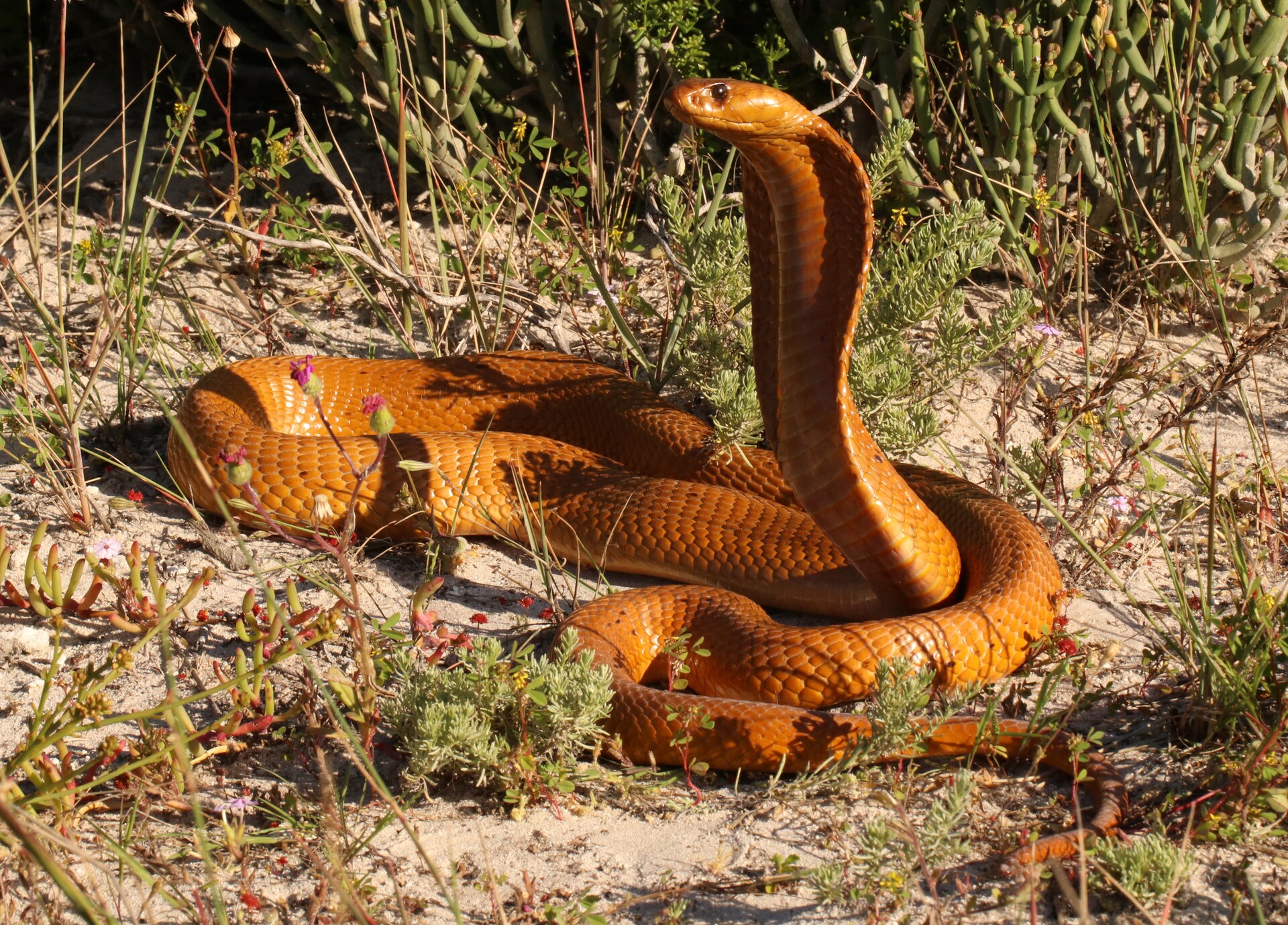
Naja nivea Facts
The Cape cobra (Naja nivea), also called the yellow cobra, is a moderate-sized, highly venomous species of cobra inhabiting a wide variety of biomes across southern Africa, including arid savanna, fynbos, bushveld, desert, and semidesert regions. The species is diurnal and is a feeding generalist, preying on a number of different species and carrion.
- Diet
- The Cape cobra is a diurnal species and actively forages throughout the day.
- Lifespan
- Up to 26 years (maximum recorded longevity)
Classification
Family: Elapidae. Order: Squamata.
Naja nivea Conservation Status
Naja nivea is listed here as Least Concern. Protecting habitat, maintaining healthy prey or food sources, and reducing human pressure are important parts of conserving wild populations.
Quick facts
- Lifespan
- Up to 26 years (maximum recorded longevity)
Fun facts
- During very hot weather, it may become crepuscular, but is rarely if ever observed during darkness.
- It is a terrestrial snake, but readily climbs trees and bushes, and shows considerable agility in, for example, systematically robbing the nests of the sociable weaver.
- The Cape cobra is a diurnal species and actively forages throughout the day.
Explore related categories
Discover more with the random animal generator or browse all animal profiles.
Similar animals
Explore nearby branches of the animal world.
Ready for another discovery?
The animal kingdom is full of surprises.
Sources and image credit
Animal facts are reviewed against the references below. The photograph remains available under the stated license.