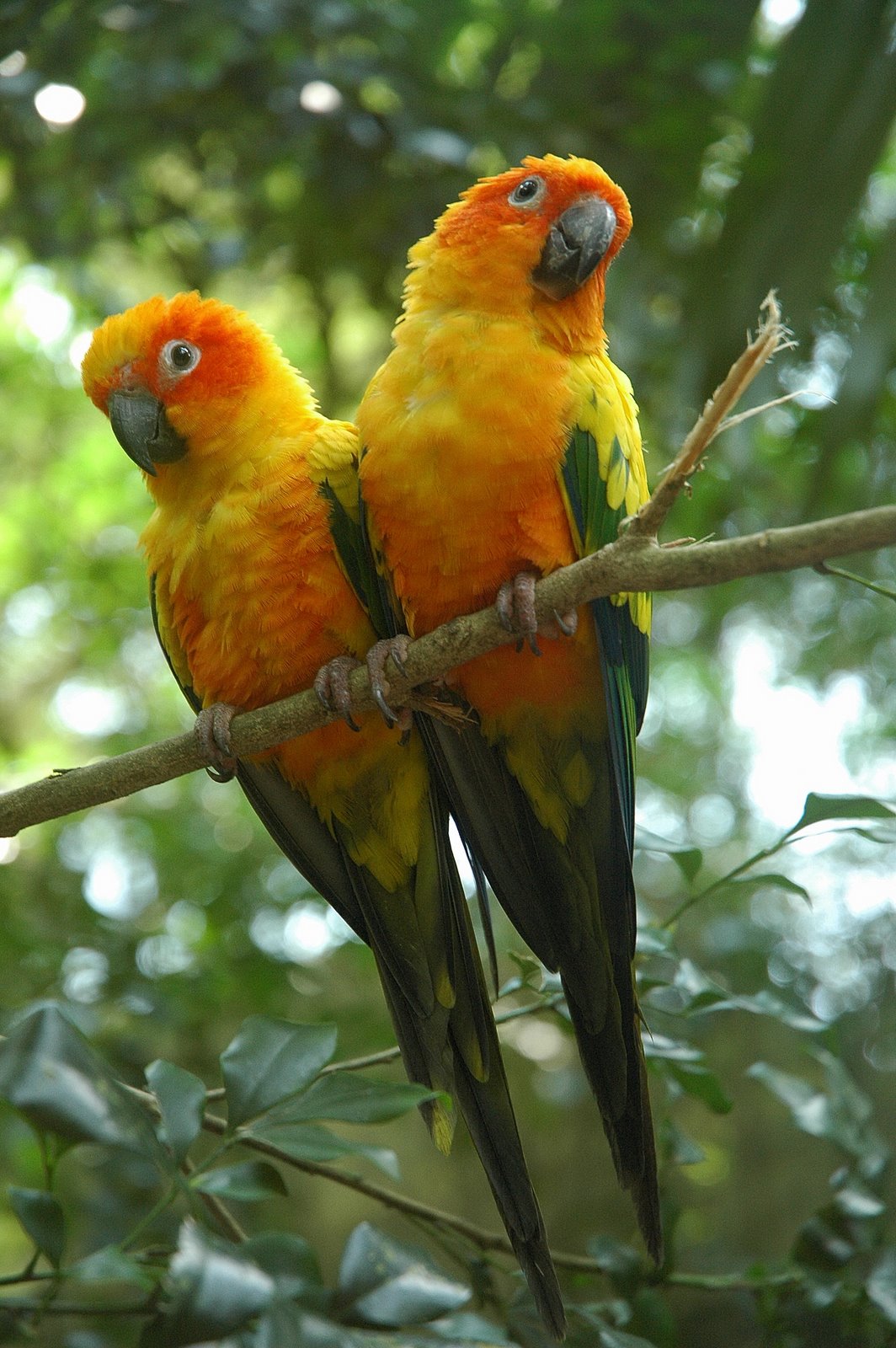
Sun Conure Facts Aratinga solstitialis
The sun conure (Aratinga solstitialis), also known as the sun parakeet, is a medium-sized, vibrantly colored parrot native to northeastern South America. The adult male and female are similar in appearance, with black beaks, predominantly golden-yellow plumage, orange-flushed underparts and face, and green and blue-tipped wings and tails.
- Diet
- In the wild, sun conures mainly feed on fruits, flowers, berries, blossoms, seeds, nuts, and insects.
Classification
Family: Psittacidae. Order: Psittaciformes.
What Do Sun Conures Eat?
Diet classification: Herbivore. Recorded foods: In the wild, sun conures mainly feed on fruits, flowers, berries, blossoms, seeds, nuts, and insects.
Sun Conure Conservation Status
Sun Conure is listed here as Endangered. Protecting habitat, maintaining healthy prey or food sources, and reducing human pressure are important parts of conserving wild populations.
Quick facts
- Diet
- Herbivore
- Weight
- 119.62 g
Fun facts
- Nonverbal communication is also practised, with a variety of physical displays.
- They move through the trees using their beaks for extra support.
- They rarely leave the flock, but when they get separated from the group, they squawk and scream in a high-pitched voice, which can carry for hundreds of yards, allowing individuals to communicate with their flock and return to them.
Explore related categories
Discover more with the random animal generator or browse all animal profiles.
Similar animals
Explore nearby branches of the animal world.
Ready for another discovery?
The animal kingdom is full of surprises.
Sources and image credit
Animal facts are reviewed against the references below. The photograph remains available under the stated license.