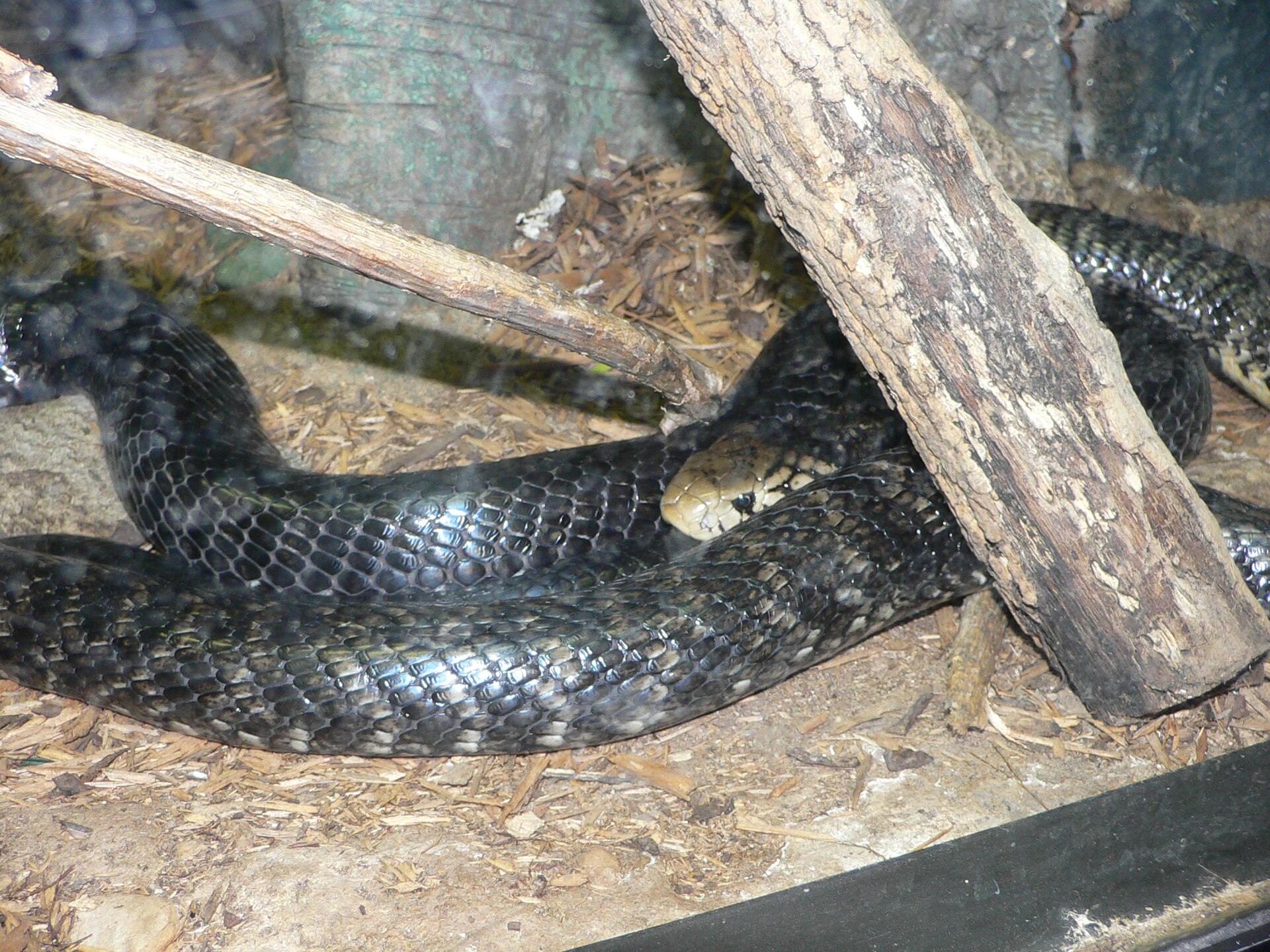
Forest cobra Facts Naja melanoleuca
The forest cobra (Naja melanoleuca), also commonly called the black cobra and the black and white-lipped cobra, is a species of highly venomous snake in the family Elapidae. The species is native to Africa, mostly the central and western parts of the continent.
- Diet
- Forest cobras will feed on a wide variety of prey, including amphibians, anuran tadpoles, fish, other snakes, monitor lizards and other lizards, birds and bird eggs, rodents, and other small mammals.
- Lifespan
- Up to 29.1 years (maximum recorded longevity)
Classification
Family: Elapidae. Order: Squamata.
Forest cobra Conservation Status
Forest cobra is listed here as Least Concern. Protecting habitat, maintaining healthy prey or food sources, and reducing human pressure are important parts of conserving wild populations.
Quick facts
- Lifespan
- Up to 29.1 years (maximum recorded longevity)
Fun facts
- Although it is active mostly during the day (diurnal) in uninhabited areas, it can also be active by night (nocturnal) where it goes into urban areas.
- In certain areas, it hides along river banks, in overhanging root systems or bird holes, and in urban areas will hide in junk piles or unused buildings.
- When not active, it takes cover in holes, brush piles, hollow logs, among root clusters or in rock crevices, or in abandoned termite mounds at forest fringe or clearings.
Explore related categories
Discover more with the random animal generator or browse all animal profiles.
Similar animals
Explore nearby branches of the animal world.
Ready for another discovery?
The animal kingdom is full of surprises.
Sources and image credit
Animal facts are reviewed against the references below. The photograph remains available under the stated license.