Research
How to Research an Animal: A Simple Fact-Checking Checklist
Build an animal fact sheet with a practical checklist for identity, source quality, measurements, conflicting claims and image attribution.
A search result can help you discover an animal, but a useful fact sheet needs traceable evidence. Start with the exact subject, ask a small number of questions and keep the source beside each answer. This is more reliable than collecting impressive sentences and trying to find references afterward.
You can use an animal profile as a starting point, then follow its sources. The process below is designed for a short personal or classroom report, not a systematic scientific review. Its purpose is to make clear what you know, where it came from and what remains uncertain.
1. Identify the subject precisely
Write the common name and scientific name shown on the profile, along with the profile URL. Check whether the entry is a species, a subspecies or a breed. When a search result uses a similar common name, verify that its scientific identification matches before borrowing facts.
Treat a name match as a first check rather than the whole verification. A source may describe a particular population, life stage or individual. Note that scope. Avoid attaching a fact about one named animal in a zoo to every member of the species without supporting evidence.
2. Ask five answerable questions
Begin with a compact set: Where does it live? What environment does it use? What does it eat? Which features help identify it? What is one well-supported behavior? Choose a question you can answer from a source rather than a vague request for amazing facts.
Keep geographic range and habitat in separate notes. Similarly, a taxonomic group and a diet label answer different questions. Do not infer a food list from the sound of an order name. A field can stay empty until an appropriate source supplies an answer.
3. Match the source to the claim
For identity, consult a reference that explicitly documents names and classification. For behavior or ecology, look for a relevant zoo, museum, conservation organization, field study or species account. Prefer a page that explains its evidence and context over one that simply repeats an isolated number.
A strong institutional name is not a substitute for a supporting passage. Open the exact page and locate the claim. Record the page title, organization or author, URL and date accessed. A photo-credit page can establish where an image came from without establishing the animal's lifespan or diet.
4. Keep a claim-and-evidence note
Paraphrase a short claim in your own words, then note which section of the source supports it. Do not copy a whole article into a fact sheet. When a source gives conditions or uncertainty, keep those qualifications in the paraphrase rather than turning a cautious statement into a universal rule.
| Field | What to record |
|---|---|
| Claim | One specific statement you plan to use |
| Source | Exact page title, author or organization, and URL |
| Context | Wild or managed care; age, sex or population where relevant |
| Measurement | Original value, unit, and what was measured |
| Uncertainty | Missing details, a range, or a disagreement |
| Access date | When you checked the page |
5. Investigate disagreement before choosing a number
When two pages disagree, compare what each number means before deciding one is wrong. They may be describing different measurement definitions, conditions or records. Keep the original wording in your private notes while checking those differences.
If you still cannot reconcile the claims, explain the disagreement or omit the number. Do not average unrelated values or select whichever sounds more dramatic. In a short report, a sentence describing the limitation is often more useful than false certainty.
A small example: a red panda habitat claim
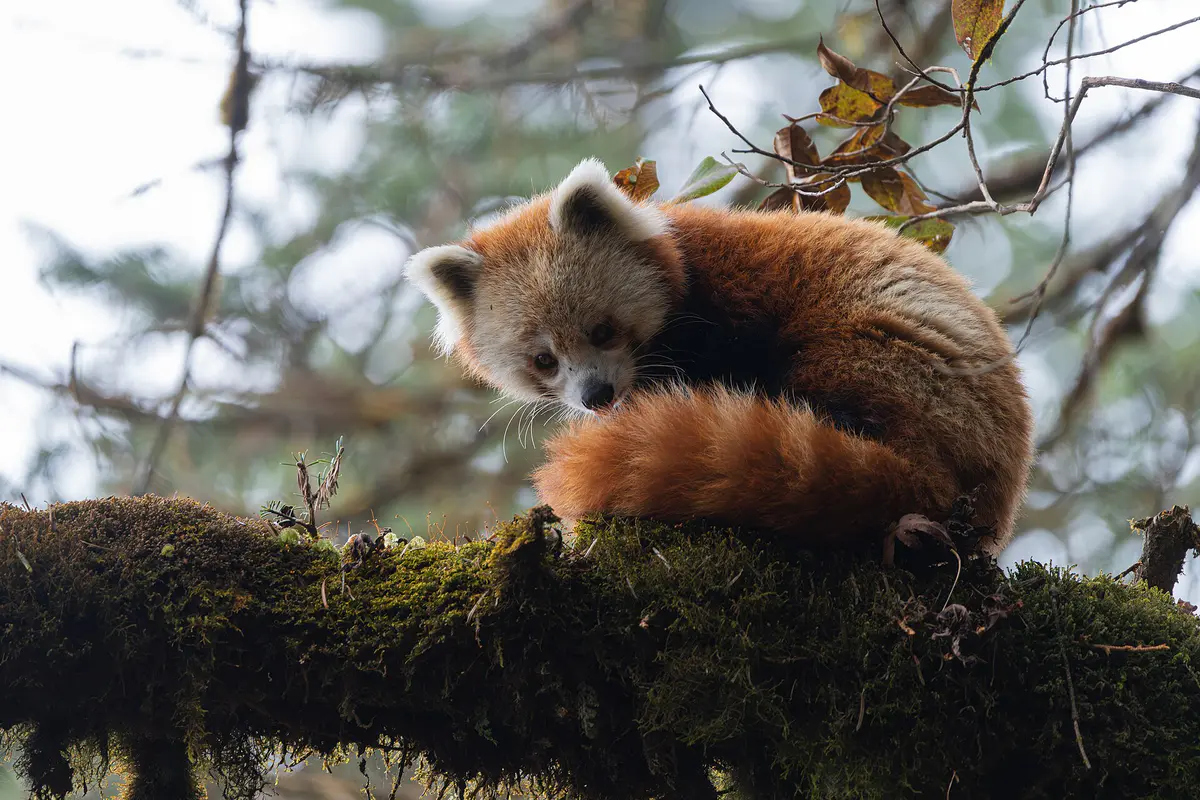
Smithsonian's red panda account describes high-altitude temperate forests with bamboo understories. A suitable note would identify the animal, paraphrase that environment and point to the Native Habitat section. The claim should stay about habitat rather than expanding into an unsupported explanation of every adaptation.
A separate photograph of a red panda standing on a branch is an observation of that image. It can illustrate the report, but it does not independently verify the animal's entire geographic range. Keep the image reference and factual reference distinct even when both appear on the same profile.
Sources for this section: Smithsonian's National Zoo: Red panda
6. Credit images and keep the limits visible
Before reusing a photograph, open its original source and license. Creative Commons explains that its licenses require attribution and recommends keeping relevant title, creator, source and license information. Follow the particular license's conditions; do not assume every image on a free website has identical permissions.
Finish your report with the sources you actually used and any unanswered question. Do not describe the work as expert-reviewed unless that review occurred. A short fact sheet with clear support is more useful than a longer one whose claims cannot be checked.
Sources for this section: Creative Commons: Reusing CC-Licensed Content
Sources & further reading
References support the specific factual or image-reuse points noted above. Activity formats are suggestions from Random Animal Picker.
Questions or corrections? Contact us. Animal facts and image licenses are documented on the linked profiles and in our source policy.