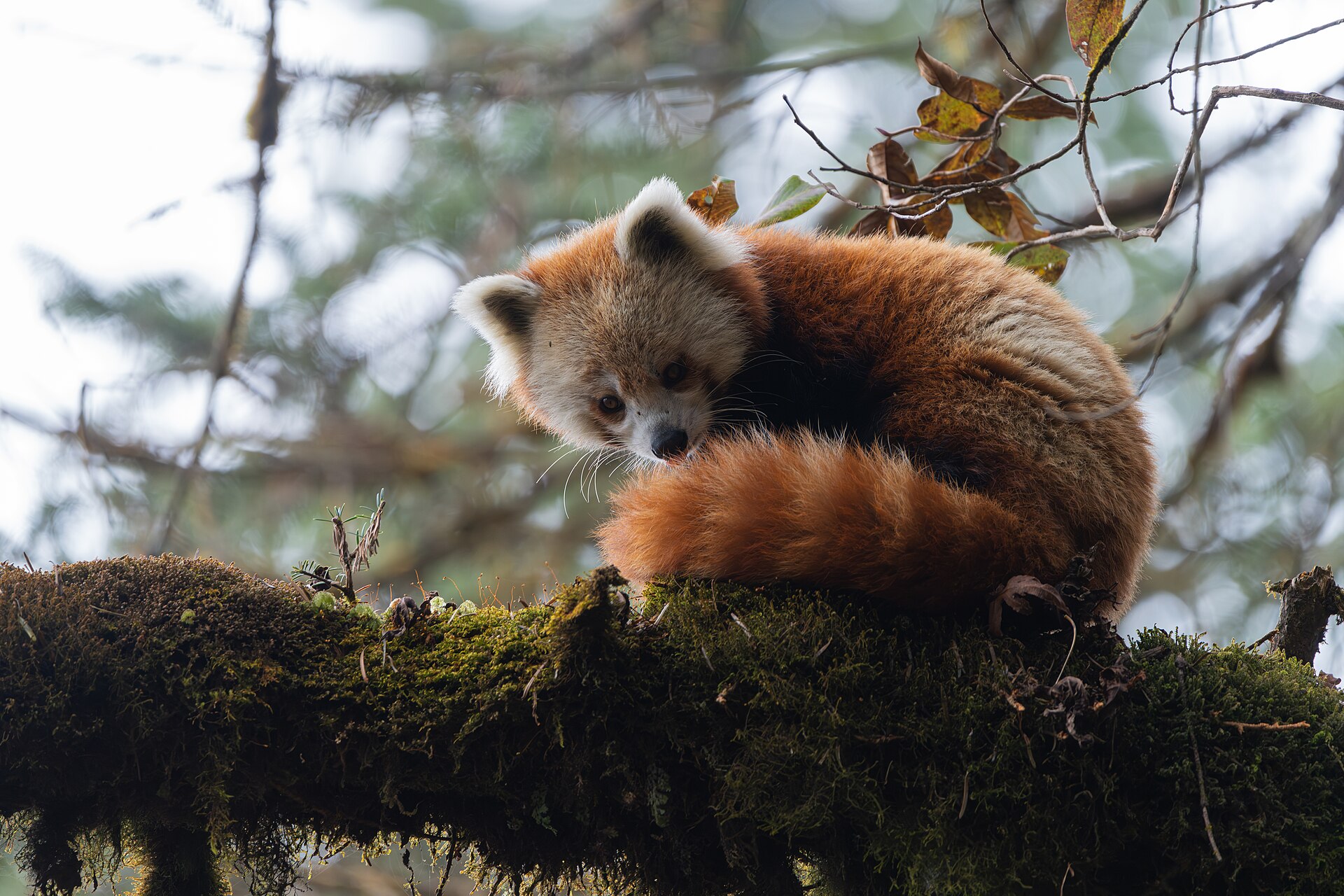
Red Panda
Ailurus fulgens
- Habitat
- Temperate Forest
- Diet
- Omnivore
- Lifespan
- 8–10 years
- Location
- Eastern Himalayas
Photo credit and available fact sources are listed in the profile.
Random selection tool · 102 catalogue entries
Ailurus fulgens
Photo credit and available fact sources are listed in the profile.
Choose 1, 3, 5, or 10 results and select Generate animals. With No repeats this round enabled, the starting result and later draws are excluded; a nearly exhausted pool returns only the remaining entries.
Reset round starts over. Save results on this device, copy their names, share an individual animal, or open its profile for available facts, sources and photo credit.
This tool draws from the site's Endangered collection. That collection label is not a promise that every result has the exact conservation category Endangered (EN). Read the individual profile's recorded status and follow its sources before describing the animal's risk category.
The generator is not a live conservation assessment or a complete list of threatened animals. A stored label may not reflect a later assessment. For a report, record the assessed subject, the source and the assessment date; distinguish that date from the day you visited the page.
Draw an entry and copy its common name, scientific name and profile link. Keep the exact identity attached to the research.
Follow the relevant conservation source. Record the category, assessment date and whether the assessment concerns the species or a more specific population or taxon.
Use a relevant source to describe one threat or conservation action. Note unresolved questions instead of assuming that the collection label supplies the explanation.
Do not assume so. This picker uses membership in the site's Endangered collection, not an exact-status query. The individual profile and the original assessment are the places to verify a category.
No. A draw selects from the site's catalog rather than requesting a fresh assessment. Check the original source and its assessment date when the current status is important.
Compare the exact animal or assessed population, the dates and the category definitions. Keep the discrepancy in your notes and use the relevant assessment for your claim; do not silently combine conflicting labels.